


Nissan’s Budget-Friendly EV Lineup for Wake Forest, NC, Drivers
Electric vehicles have entered a more practical phase where shoppers can now compare monthly costs, charging habits, and maintenance with less hype and more usable data. Within that shift, evaluating the most affordable Nissan options in the EV lineup becomes clearer, especially for buyers in Wake Forest, NC. For drivers researching a modern electric car, this guide from Crossroads Nissan of Wake Forest focuses on real-world usability rather than speculation.
At the center of Nissan’s electrification strategy, models like the Nissan LEAF and Nissan ARIYA represent accessible entry points into the brand’s Nissan electric lineup. Visit Crossroads Nissan of Wake Forest to explore your options and experience these EVs firsthand.
How We Defined “Affordable” for Nissan’s EV Lineup
Affordability starts with more than a low starting MSRP, it’s about how the vehicle fits into your life over time. At Crossroads Nissan of Wake Forest, we define it through the full ownership picture, including purchase price, total cost of ownership, maintenance, insurance costs, and long-term usability.
A truly budget-friendly battery-electric vehicle balances a practical range estimate with real-world EPA range, while also offering flexible charging options like home charging, level 1 charging, level 2 charging, and DC fast charging. Long-term durability also plays a major role, especially when considering factors like battery degradation and battery capacity loss.
Ultimately, the most affordable EV is the one that meets your needs without requiring unnecessary upgrades. While a base trim may seem like the lowest-cost option, a mid-level trim with stronger standard features, infotainment, and driver-assistance features can often provide better long-term value and satisfaction.
Selection Criteria for Budget Electric Cars
To identify the best affordable electric cars, we focused on how each model performs in real-world use. Our evaluation prioritized range per dollar to measure overall value, along with charging convenience and charging speed to reflect how easily the vehicle fits into a daily routine. We also considered access to a reliable charging network, which is especially important for drivers who occasionally depend on public charging.
Beyond daily usability, we looked at long-term ownership factors, including how the vehicle holds up after eight years and what drivers can expect in terms of tire wear, insurance costs, and electricity usage. Financial flexibility was another key factor, so we evaluated options like leasing, financing, resale value, and potential savings through available EV incentives.*
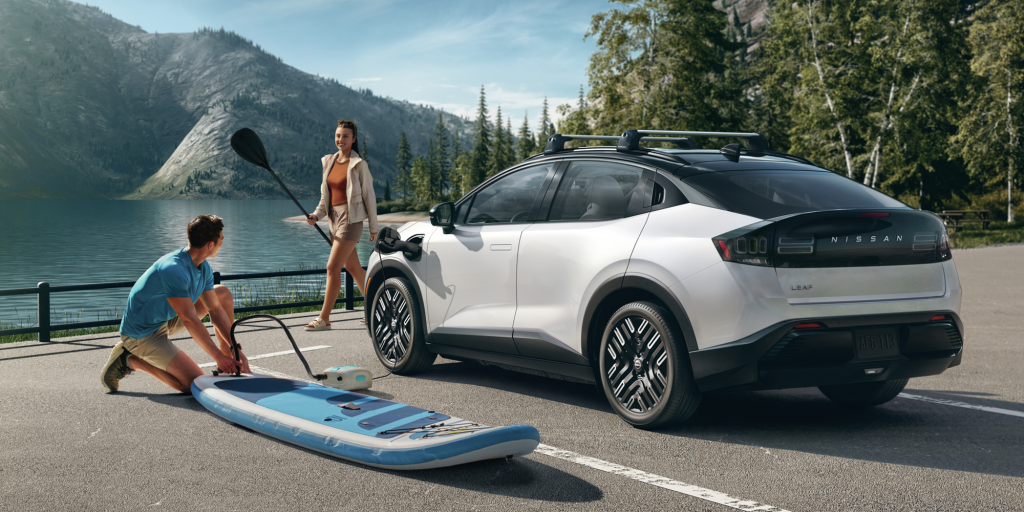
Charging, Costs, and Real-World Ownership
Charging your electric vehicle is central to affordability. By taking care of how you charge one, you’ll reap long-term savings.
- Level 1 charging: Works for low-mileage drivers using standard outlets
- Level 2 charging: Best for overnight home charging and daily commuters
- DC fast charging: Useful for travel, especially when planning longer trips
Nissan EVs may use various types of charging connectors. Electricity costs vary, but understanding your electricity cost per kWh helps estimate the cost per mile, which is often lower than gasoline. Charging during peak charging hours can increase expenses, so timing matters. For drivers relying on public charging, station availability and pricing vary by charging network, making planning essential.
Range and Everyday Usability
Range is more than a number for the most affordable electric car. A quoted EPA range should be adjusted for:
- Weather
- Traffic
- Driving style
- Long-term battery degradation
For example, the Nissan LEAF offers up to 303 miles of range, but real-world use depends on habits and charging access.**
Features like regenerative braking and one-pedal driving improve efficiency and reduce wear, while systems like a heat pump help preserve range in colder climates.
Comparing Nissan EV Options
When comparing Nissan EV options, the decision often comes down to how each model aligns with your budget, driving habits, and feature expectations rather than just headline specs. The Nissan LEAF typically offers the lowest entry point with a more accessible starting MSRP, making it ideal for drivers focused on minimizing upfront costs and relying primarily on home charging for daily commuting. In contrast, a pre-owned Nissan ARIYA delivers more range, a more refined interior, and added comfort features, which can make it a better fit for households with mixed driving needs or longer trips. While the Nissan LEAF is best suited for predictable routines and shorter distances, a used Nissan ARIYA provides greater flexibility for drivers who anticipate a combination of commuting and regional travel. Ultimately, weighing factors like charging habits, total cost of ownership, and desired feature level will help determine which model offers the better overall value for your situation.
Nissan LEAF: The Practical Commuter EV
When it comes to the most affordable electric cars, the Nissan LEAF remains one of the best choices in the EV market. Known for its dependable battery life, exceptional value, and reliable kWh battery, the Nissan LEAF is a low-cost solution for modern drivers. With a competitive starting price and a flexible price range across trims, it’s a smart pick for those seeking the cheapest EV without sacrificing quality.
The Nissan LEAF’s EPA-estimated range of up to 303 miles per single charge provides all the capability most drivers need. Standard infotainment features include Apple CarPlay® and Android Auto™, Automatic Emergency Braking, and Advanced Driver Assistance systems, offering confidence on every drive. The responsive steering wheel, well-padded rear seats, and ample cargo space enhance comfort and practicality, while its electric motor delivers strong acceleration with zero emissions.
Drivers looking for the most affordable electric cars often discover that no one in the segment balances affordability and performance like Nissan. Its base model combines impressive driving range, reliable charging port design, and smooth handling for an unbeatable driving experience.
Nissan ARIYA: A Pre-Owned Value Option
While no longer part of the current new model year offerings, the Nissan ARIYA remains relevant in the used market. Offering front-wheel drive and available all-wheel drive configurations, it blends versatility with performance. With its spacious interior and refined design, the Nissan ARIYA provides a premium EV experience without the premium price tag. The Nissan ARIYA has an EPA-estimated range exceeding 289 miles,** making it ideal for extended road trips. Its efficient heat pump improves performance in cold weather, while intelligent climate control ensures comfort year-round. Features like Adaptive Cruise Control, a high-resolution infotainment system, and superior battery technology deliver a next-level driving experience. This budget electric car offers drivers a competitive range and advanced technology as needed. The Nissan ARIYA’s innovations included substantial battery capacity, fast charging capability, and refined driver-assistance features. With a smooth driving experience and a quiet cabin, the Nissan ARIYA stands out among the most affordable electric cars available. You can secure a pre-owned or Certified Pre-Owned model to ensure you’re getting the best affordable EV.

Financial Considerations
The most affordable electric cars involve more than just the purchase price—it’s really about how the costs add up in everyday life. For example, buyers should factor in things like sales tax and registration fees, which can slightly increase what you pay up front. It’s also worth looking into eligibility for EV incentives, since these programs can reduce your overall cost, though they aren’t always guaranteed. Over time, many EV drivers benefit from long-term savings on fuel and maintenance, because electricity is typically cheaper than gasoline and electric vehicles require fewer routine services. That’s where cost per mile becomes important—it helps you understand how much you’re really spending to drive compared to a traditional gas-powered vehicle. When it comes to paying for the vehicle, leasing can be appealing if you want lower upfront costs and less concern about long-term battery degradation, while financing may be a better fit for buyers thinking about keeping the car longer and maximizing resale value down the road.
Takeaways for Wake Forest, NC, EV Shoppers
For drivers in Wake Forest, NC, the most affordable Nissan EV is typically the Nissan LEAF, especially when:
- Daily mileage is predictable
- Home charging is available
- Long-distance travel is occasional
The best choice ultimately depends on your lifestyle, budget, and charging access—not just the lowest starting MSRP. At Crossroads Nissan of Wake Forest, we’ll help match you with the right EV based on real driving patterns. Visit us for a test drive of your next ride today!
FAQs
What happens to EV after 8 years?
Most EVs still operate well after eight years, but battery capacity can decline and reduce usable range. Check warranty terms, charging habits, and how much daily buffer you need.
What will happen to gas stations when cars go electric?
Many gas stations are adding chargers, expanding convenience retail, or changing site use over time. The transition is gradual and depends on local traffic, utility access, and EV adoption.
What is Nissan’s best-selling EV car?
The Nissan LEAF remains the core Nissan EV nameplate and the most recognized model for mainstream electric driving. The Nissan ARIYA has style and innovation, but the Nissan LEAF remains the more established volume player.
What is the Nissan LEAF’s total range after one charge?
The Nissan LEAF offers up to 303 miles of estimated range on properly equipped trims. Other trims provide different range estimates, so the right choice depends on commute length and charging access.
How long does a Nissan EV take to charge?
Charging time depends on the charger. Level 1 suits overnight or backup charging, level 2 adds meaningful range in a few hours, and DC fast charging can restore much of the battery in far less time.
Which charging option is the most ideal for my Nissan?
Level 2 is the most practical choice for many drivers because it supports dependable overnight charging and easier top-offs. Level 1 works for lighter use, while DC fast charging is best saved for travel or occasional time-sensitive charging.
*Contact Crossroads Nissan of Wake Forest for more information.
**Use for comparison only. Visit www.fueleconomy.gov for more information.

