

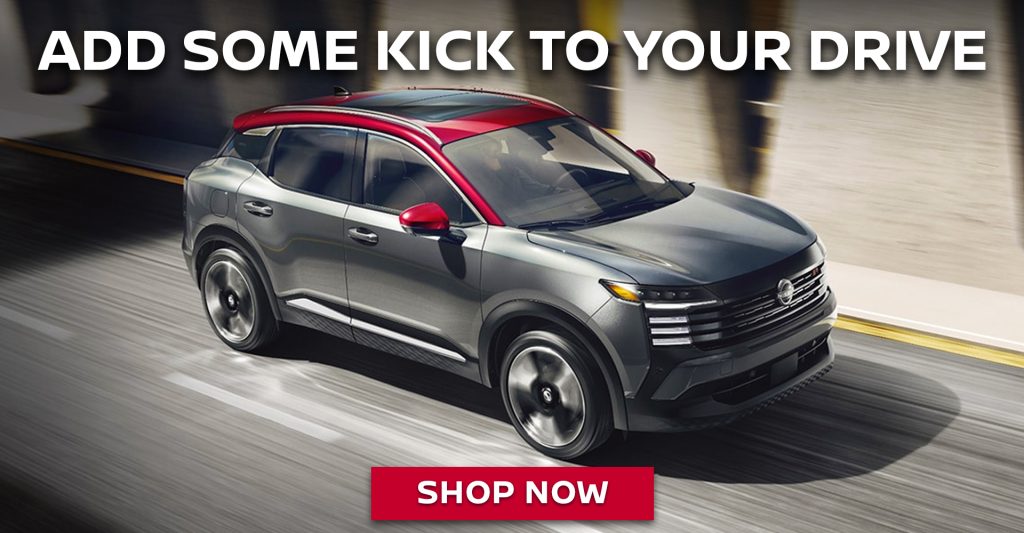
Two Popular Small SUVs, One Smart Choice
Choosing between two small SUVs can look similar at first glance, especially when both are designed for commuting, errands, and everyday family life. When comparing the Nissan Kicks vs. Honda HR-V, many shoppers quickly discover that the real difference comes down to overall value, efficiency, and smart, everyday practicality.
While the Honda HR-V offers many features, the Nissan Kicks stands out where it matters most for many drivers: affordability, efficiency, and modern technology. With a lower starting price, impressive fuel economy, flexible cargo space, and a well-equipped technology suite, the Nissan Kicks delivers outstanding value for drivers who want more features and savings in a compact crossover.
This comparison guide is built for SUV buyers, commuters, city drivers, and small families who want straightforward information. If you’re weighing factors like price, fuel economy, driver-assist features, cargo space, and interior comfort, the Nissan Kicks from Crossroads Nissan of Wake Forest shows how a smartly designed crossover can deliver big benefits in a compact package.
Who This Comparison Is For
This matchup fits buyers who want a subcompact SUV or compact SUV alternative that is easy to park, efficient to own, and comfortable enough for daily life. It is especially useful for shoppers balancing ownership costs, passenger capacity, reliability, and versatility. If you want a vehicle that handles city driving well, supports highway driving with modern safety features, and keeps your budget in check, both models deserve a look. Still, the Nissan Kicks often makes the stronger case for value-focused drivers shopping with our team at Crossroads Nissan of Wake Forest.
Quick Specs and Key Differences
At a glance, both vehicles serve a similar mission as practical crossover choices with seating for five and available all-wheel drive. The biggest key differences are simple: the Honda HR-V offers more horsepower, while the Nissan Kicks leads in value, fuel efficiency, cargo space, and standard tech presentation. For many high-intent shoppers, that balance matters more than one standout spec. A stronger engine can be helpful, but lower fuel costs, a friendlier starting price, and better everyday usability often have a bigger impact over time.
At A Glance
The Nissan Kicks and Honda HR-V are both compact SUVs with seating for five, but they differ in several key areas. The Nissan Kicks typically starts at a lower price and is powered by a 2.0L DOHC 16-valve 4-cylinder engine producing 141 horsepower and 140 lb.-ft. of torque, paired with an Xtronic CVT® and available with front-wheel drive or all-wheel drive. It offers drive modes including Sport, Standard, Eco, and Snow, an EPA-estimated 28 city/35 highway MPG, up to 60 cu.ft. of maximum cargo space, and a large 12.3-in. touchscreen.* The Honda HR-V, which starts at a higher price, features a 158-horsepower 2.0L engine with a CVT and available Real Time AWD™, along with Snow mode. It provides up to 55.1 cu.ft. of cargo space (24.4 cu.ft. behind the rear seats) and a 9-inch color touchscreen. Safety features differ as well: the Nissan Kicks is equipped with Nissan Safety Shield® 360, while the Honda HR-V offers Honda Sensing®.
The Nissan Kicks stands out here for shoppers who want more practical value in a small SUV. The Honda HR-V keeps an advantage in engine and power specs, but the Nissan Kicks wins more categories that affect daily ownership.
Nissan Kicks vs. Honda HR-V Specs: Performance and Driving Experience
The Honda HR-V offers more horsepower on paper with its 158 horsepower output, which may appeal to drivers who prioritize quicker acceleration. However, for many daily drivers, the Nissan Kicks focuses on the qualities that matter most in real-world use. The Nissan Kicks is built for everyday practicality. Its 2.0L DOHC 16-valve 4-cylinder engine, paired with the smooth Xtronic CVT®, delivers predictable, efficient performance that feels comfortable in stop-and-go traffic, on tight city streets, and during daily commuting. Instead of emphasizing raw power, the Nissan Kicks prioritizes drivability, efficiency, and ease of use, making it a practical, well-balanced choice for drivers who spend most of their time navigating urban roads and running everyday errands.
Engine Output and Everyday Usability
While the Honda HR-V offers slightly higher horsepower on paper, the Nissan Kicks is designed to deliver the kind of balanced performance most drivers want in a subcompact SUV. Its 2.0L engine produces 141 horsepower and 140 lb.-ft. of torque, an output that pairs well with the Nissan Kicks’ lightweight design to create smooth, efficient everyday driving. This setup helps the Nissan Kicks feel responsive in city traffic while maintaining strong fuel economy and easy maneuverability. The Honda HR-V’s 158-horsepower engine may provide a small boost during highway acceleration, but the Nissan Kicks focuses on the kind of practical, efficient performance that makes daily commutes and errands more comfortable and economical.
Transmission, AWD, and Drive Modes
The Nissan Kicks pairs its engine with an Xtronic CVT® that behaves predictably in traffic and helps maximize fuel efficiency. Available Intelligent All-Wheel Drive and drive modes, including Sport, Standard, Eco, and Snow, add flexibility for varying road conditions. The Honda HR-V offers available Real Time AWD™ with Intelligent Control System™, plus Snow mode and Hill Descent Control for mixed weather and steeper terrain. Buyers in rainy or snowy climates should know that both models offer all-wheel drive, but the Nissan Kicks offers a broader set of selectable drive modes.
Price-to-Feature Value
The Nissan Kicks also supports its value story with a lower starting price. When a vehicle costs less up front and helps reduce fuel spending, it becomes easier to see why many buyers view it as the smarter small SUV purchase. It also offers strong standard technology and safety features, reducing the need to move up to a higher trim just to get the features you want.
Interior Space, Comfort, and Cargo Flexibility
Interior comfort and cargo space often matter more than straight-line speed in a small SUV. These vehicles are often asked to carry groceries, backpacks, strollers, sports gear, and weekend luggage without making daily driving more difficult. The Nissan Kicks performs especially well here because it combines a usable cabin layout with excellent cargo capacity. While the Honda HR-V remains practical, the Nissan Kicks offers more maximum cargo space and strong flexibility for everyday hauling.
Passenger Comfort and Cabin Layout
The Nissan Kicks stands out with seating for five, a spacious, open cabin feel, and available Zero Gravity front seats designed to reduce fatigue on longer drives. Its elevated visibility makes navigating tight parking lots and busy city streets noticeably easier, an advantage for urban drivers and first-time SUV owners alike. While the Honda HR-V offers a clean dashboard and useful storage solutions, the Nissan Kicks takes everyday usability further. With a more airy interior, smarter tech integration, and a layout built around real-world convenience, the Nissan Kicks delivers a more comfortable and practical driving experience overall.
Cargo Space and Everyday Utility
The Nissan Kicks offers up to 60 cu.ft. of cargo capacity with the rear seats folded. Its 60/40-split rear seats and fold-flat rear seats make it easy to switch from passengers to gear without much effort. The Honda HR-V provides 24.4 cu.ft. behind the rear seats and up to 55.1 cu.ft. with the second row folded. That is still useful, but the Nissan Kicks gives shoppers a measurable cargo capacity advantage for bulkier items and weekend travel.
Technology and Infotainment Features
Technology is one of the clearest strengths of the Nissan Kicks in this comparison. Shoppers who want modern infotainment and interior tech without climbing deep into expensive trim levels will likely find the Nissan approach more appealing. The focus here is not luxury for its own sake. It is about getting a technology suite that feels current, easy to use, and worth the money in a practical crossover.
Screens, Connectivity, and Smartphone Integration
The Nissan Kicks features a 12.3-in. NissanConnect® touchscreen with Apple CarPlay® and Android Auto™. That larger display gives the cabin a more modern look and makes maps, media, and app access easier to manage at a glance. The Honda HR-V includes a 9-in. color touchscreen with wireless Apple CarPlay® and Android Auto™ compatibility. Wireless phone integration is convenient, but the Nissan Kicks counters with a larger screen and a more tech-forward presentation.
Available Upgrades That Matter
The Nissan Kicks also offers an available 12.3-in. LCD display that functions as a digital instrument cluster. This upgrade helps centralize key vehicle information and gives the driver a cleaner, more advanced cockpit feel. Honda offers audio upgrades, and some buyers will appreciate them. Still, the Nissan Kicks makes a stronger overall impression on shoppers who care about screen size, interface clarity, and the visible value of its interior tech.
Safety and Driver-Assist Comparison
Safety is a major concern for anyone buying a subcompact SUV or small SUV for commuting or family use. Both models offer a strong safety suite, but the Nissan Kicks does a particularly good job of pairing broad active safety coverage with useful available upgrades. That matters in traffic, in parking lots, and on the highway. It also matters for buyers who want driver-assist technology that supports confidence without making the vehicle feel overly complicated.
Standard Safety Features
Every Nissan Kicks comes with Nissan Safety Shield® 360. This package includes Rear Automatic Braking, Blind Spot Warning, and Automatic Emergency Braking with Pedestrian Detection, all of which are helpful in crowded daily driving situations. The Honda HR-V comes with Honda Sensing®, including Road Departure Mitigation System, Adaptive Cruise Control with Low-Speed Follow, Lane Keeping Assist System, and Traffic Jam Assist. Honda covers important basics well, but Nissan remains especially compelling for buyers who want broad standard protection plus more advanced available features.
Honda Sensing® is a collection of driver-assist technologies designed to help drivers stay aware and reduce the chance of accidents. Features like Road Departure Mitigation System, Adaptive Cruise Control with Low-Speed Follow, and Lane Keeping Assist with Traffic Jam Assist help monitor the road, maintain following distance, and keep the vehicle centered in its lane.
While Honda Sensing® focuses heavily on lane-based assistance, the Nissan Kicks offers Nissan Safety Shield® 360, which emphasizes awareness all around the vehicle. With features like Automatic Emergency Braking with Pedestrian Detection, Rear Automatic Braking, Blind Spot Warning, Rear Cross Traffic Alert, and Lane Departure Warning, the Nissan Kicks offers a 360-degree approach that many drivers find more practical for everyday driving.
Available Driver Assistance and Parking Support
Available Nissan ProPILOT Assist adds extra support during highway travel in the Nissan Kicks. It can reduce stress on longer drives and help make commuting feel more manageable. The available Around View® Monitor is another important advantage for urban drivers. In tight parking spaces and crowded lots, that extra visibility can make the Nissan Kicks easier to place than many rivals.
Exterior Design and Style Differences
When comparing exterior design, both SUVs offer contemporary styling, but the latest Nissan Kicks offers a noticeably more vibrant, expressive look in the segment. Its design leans into bold, youthful styling with a striking front grille, dynamic rear detailing, and layered LED lighting that gives the vehicle a modern, energetic presence on the road. The available two-tone paint treatments add even more individuality, helping the Nissan Kicks stand apart in a category where many vehicles tend to blend together.
Color options further enhance that sense of personality, with choices like Deep Blue Pearl, Canyon Bronze Metallic, Aspen White TriCoat, and Yuzu Yellow Metallic offering drivers a chance to pick a finish that feels distinctive. Altogether, the Nissan Kicks balances style and practicality in a way that feels fresh and confident.
The Honda HR-V takes a more subtle design approach, using smooth body lines, laser-brazed roof construction, and a honeycomb-style grille to create a clean, refined appearance. While the Honda HR-V Sport trim adds blacked-out accents and 18-in. wheels for a slightly sportier feel, the overall design remains more understated. For drivers who want a small SUV that delivers a stronger visual impact and a bit more personality on the road, the Nissan Kicks clearly stands out.
Which SUV Should You Choose?
Choosing between these two SUVs ultimately comes down to what matters most in your daily drive. For shoppers focused on value, efficiency, and getting more features for the money, the Nissan Kicks stands out as a smart choice. It delivers impressive fuel economy, practical versatility, and a well-rounded set of technology and safety features that make everyday driving easier and more enjoyable. The Honda HR-V remains a capable crossover, particularly for drivers who prioritize extra horsepower or have a strong preference for the Honda brand. However, for many buyers, the Nissan Kicks offers a more compelling, well-balanced package in terms of overall affordability, efficiency, and everyday usability. Choose it if you want a vehicle built around commuting, errands, and smart ownership costs rather than just a power advantage on paper. For many buyers, that is the better long-term value equation.
Final Verdict
The Nissan Kicks delivers the strongest combination of affordability, fuel efficiency, advanced safety features, infotainment technology, and everyday practicality in this matchup. For shoppers researching the Nissan Kicks vs. the Honda HR-V reliability, the Nissan Kicks stands out as the smarter long-term choice thanks to its dependable performance, efficient design, and lower overall cost of ownership. It’s a small SUV that consistently meets the needs of commuters, first-time buyers, and families who want maximum value without sacrificing modern features. While the Honda HR-V may appeal to drivers focused primarily on horsepower, the Nissan Kicks offers a more well-rounded package for everyday driving. With its strong efficiency, practical interior space, and impressive feature value, the Nissan Kicks clearly emerges as the better choice and the overall value leader in this comparison. See it for yourself in person at Crossroads Nissan of Wake Forest today.
FAQs
Is the Nissan Kicks bigger than the Honda HR-V?
The Honda HR-V is generally the larger vehicle overall. Still, the Nissan Kicks is highly competitive in cargo flexibility, offering up to 60 cu.ft. of cargo space with the rear seats folded.
What Nissan Model is comparable to the Honda HR-V?
The Nissan Kicks is the closest Nissan rival to the Honda HR-V. Both are small crossover models aimed at buyers who want practicality, fuel efficiency, available all-wheel drive, and modern safety features.
*EPA Fuel Economy Estimates. Actual mileage may vary with driving conditions—use for comparison only.
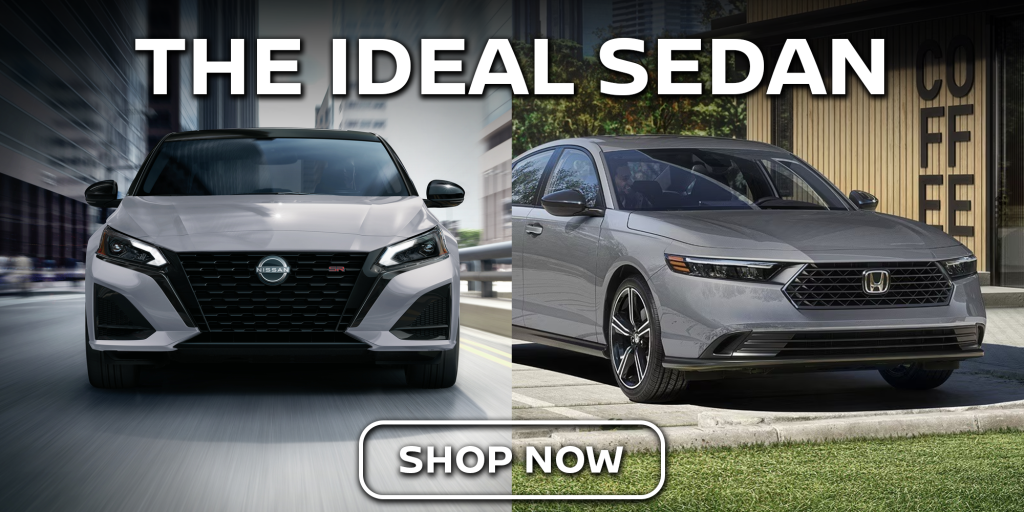
Midsize Sedan Comparison Between The Nissan Altima & Honda Accord
The Nissan Altima and Honda Accord are two popular choices in the midsize sedan segment, offering a combination of comfort, performance, and advanced features. When comparing the Nissan Altima vs. Honda Accord, it’s clear that both sedans are designed to cater to modern drivers looking for a reliable and stylish new vehicle. Whether you’re prioritizing fuel efficiency, interior features, or driving dynamics, these cars are worth considering for your next purchase.
In this comprehensive car comparison from Crossroads Nissan of Wake Forest, we’ll explore key aspects such as models, trim levels, engine options, and interior dimensions to help you decide which sedan best suits your needs. From their standard features to advanced safety technologies, the Nissan Altima vs. Honda Accord specs bring a lot to the table in the competitive midsize sedan market.
Key Features of the Nissan Altima and Honda Accord
The Nissan Altima vs. Honda Accord comparison offers a diverse selection of trim levels to suit different preferences and budgets. The Nissan Altima comes in multiple trims, starting with the base model and progressing to higher trims like the Nissan Altima SR. It offers enhancements such as advanced technology, improved comfort, and additional safety features. The Honda Accord also offers a diverse range of trims, competitive and well equipped at the entry level. With both sedans, there’s a trim level to meet the needs of almost any buyer, whether you prioritize affordability or premium features.
Both the Nissan Altima vs. Honda Accord excel in offering comfort and spaciousness, but they do so in slightly different ways. The Nissan Altima stands out with its Zero Gravity front seats, designed to help reduce fatigue during long drives. These thoughtfully engineered seats, combined with generous front legroom, ensure a comfortable experience for both the driver and passenger. Additionally, the Nissan Altima’s interior dimensions are designed to maximize passenger comfort, making it a strong choice for families and commuters alike.
On the other hand, the Honda Accord provides slightly greater overall passenger volume, ensuring plenty of space for occupants in both the front and rear seats. While the Honda Accord emphasizes maximizing total cabin space, the Nissan Altima focuses on delivering exceptional front-seat comfort and refined ergonomics that many daily drivers appreciate.
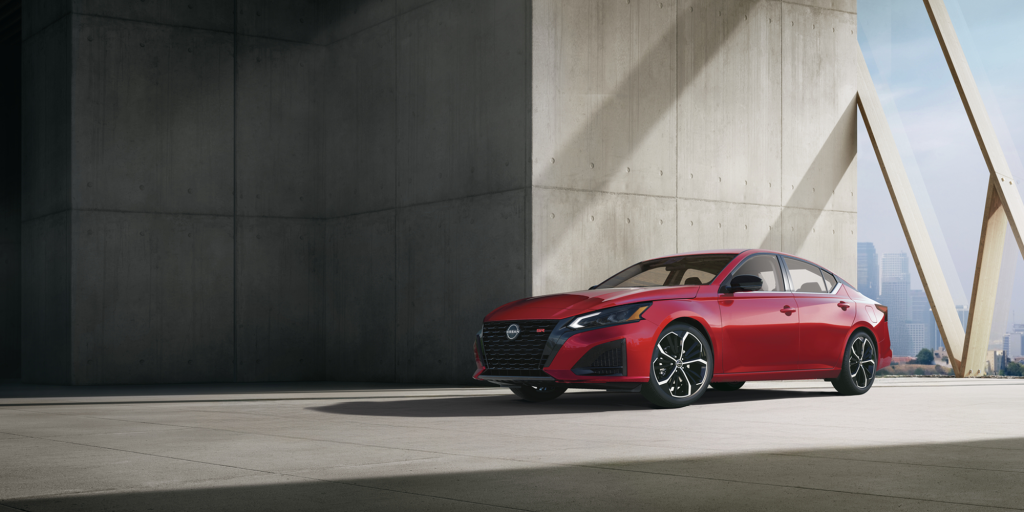
Performance and Driving Dynamics
When it comes to engine options, both Nissan Altima vs. Honda Accord’s reliability is the usage of efficient powertrains to suit a variety of driving needs. They also utilize automatic transmissions designed for smooth, responsive performance. The Nissan Altima is powered by a standard 2.5L four-cylinder engine that delivers 188 horsepower and 180 lb.-ft. of torque, providing a strong balance of performance and efficiency. Properly equipped FWD models achieve up to an EPA-estimated 26 MPG in city driving and 36 MPG on highways, making it an excellent choice for highway commuters.* This combination allows the Nissan Altima to deliver smooth acceleration while maintaining impressive fuel economy.
Meanwhile, the Honda Accord features a smaller 1.5L turbocharged four-cylinder engine producing 192 horsepower and 192 lb.-ft. of torque. Hybrid trims are also available for drivers seeking enhanced fuel efficiency for better EPA ratings, though at a premium price.
In terms of driving dynamics, the Nissan Altima offers a clear advantage with its available Intelligent All-Wheel Drive system—a feature not offered on the Honda Accord. This system enhances traction and confidence in challenging weather conditions such as rain or snow, giving the Nissan Altima broader versatility for drivers in varying climates. By contrast, the Honda Accord focuses on delivering a composed ride with responsive handling.
Technology and Infotainment Systems
In today’s innovative age, drivers often expect their vehicles to come equipped with advanced connectivity, and both the Nissan Altima and Honda Accord deliver. Standard Apple CarPlay® and Android Auto™ integration are included, allowing seamless smartphone connectivity through the center touchscreen display. The Nissan Altima vs. Honda Accord differ in each of their takes on advanced technology and driver convenience.
While the infotainment systems in both sedans are designed to be intuitive and streamlined, safety remains a priority in both vehicles. The Honda Accord comes standard with Honda Sensing®, a suite that includes plenty of protection everywhere you go. Similarly, the Nissan Altima comes standard with Nissan Safety Shield® 360, which also gives you all of the tools you need to stay safe. Some features from both include a system that monitors your blind spot, a system that alerts you of any cars in the adjacent lanes, and an automatic braking system designed to prevent collisions. With these comprehensive safety systems included, the Nissan Altima vs. Honda Accord are safe options. However, the Nissan Altima takes safety to another level. With Nissan’s available ProPILOT Assist, it’ll help you stay centered in your lane, maintain a set distance from the vehicle ahead, and can even bring your Nissan Altima to a complete stop before resuming speed as traffic begins moving again. You can also equip your Nissan with the available Intelligent Around View® Monitor to provide a virtual composite 360-degree view to help make parking easier and more confident.
Practicality: Cargo Space and Seating Capacity
Both Nissan Altima vs. Honda Accord seat up to five passengers comfortably. Ample legroom in both rows ensures that occupants can enjoy longer journeys without feeling cramped. Whether commuting or taking a weekend trip, both models provide a well-balanced mix of passenger comfort and cargo flexibility.
For buyers who prioritize practicality, the Nissan Altima vs. Honda Accord offer impressive trunk capacity. The Nissan Altima provides 15.4 cu.ft. of trunk space, offering generous room for groceries, luggage, or everyday essentials. The rear seats also fold down to accommodate longer items when needed, giving drivers up to 58.1 cu.ft. The Honda Accord offers 16.7 cu.ft. of trunk space, giving it a slight edge in total volume. However, you’ll find the Nissan Altima’s trunk capacity more than sufficient for daily needs, especially when combined with its efficient interior layout.
Your Next Midsize Sedan
In the Nissan Altima vs. Honda Accord comparison, both sedans deliver strong value. However, the Nissan Altima stands out with its available Intelligent All-Wheel Drive, standard Safety Shield® 360 suite, Zero Gravity seating, and up to 36 highway MPG in FWD models. This blend of efficiency, comfort, and all-weather capability makes it an exceptionally well-rounded choice in the midsize sedan segment.
While the Honda Accord remains competitive, the Nissan Altima’s unique combination of features gives it a meaningful advantage for many drivers—especially those who want added traction confidence without sacrificing fuel economy. If you’re searching for a midsize sedan that balances practicality, comfort, and versatility, the Nissan Altima deserves serious consideration. Visit Crossroads Nissan of Wake Forest to test-drive one today.
*EPA Fuel Economy Estimates. Actual mileage may vary with driving conditions—use for comparison only.

The Sedan For You: Deciding Between The Nissan Sentra & Honda Civic
When shopping for a compact sedan that blends efficiency, style, and everyday comfort, the Nissan Sentra and Honda Civic consistently rise to the top of the conversation. In this in-depth Nissan Sentra vs. Honda Civic comparison, we’ll explore how each model fits into modern lifestyles, whether you’re commuting across town, heading out on weekend road trips, or simply upgrading to a dependable new car. Both models offer strong value in the competitive world of compact cars, but as you’ll see throughout this Nissan Sentra vs. Honda Civic evaluation, the Nissan Sentra brings a compelling balance of performance, technology, and safety to the table. Continue reading this blog from Crossroads Nissan of Wake Forest to see how each model performs against the other.
Power, Efficiency, and Exterior Character
In any Nissan Sentra vs. Honda Civic discussion, performance and fuel efficiency are often the first areas drivers examine. The Nissan Sentra has a 2.0L direct injection gasoline four-cylinder engine that produces 149 horsepower and 146 lb.-ft. of torque. Every Nissan Sentra features front-wheel drive and a CVT (Continuously Variable Transmission), delivering smooth acceleration and the added benefit of selectable drive modes such as ECO Mode and Sport Mode. On select models, the Nissan Sentra achieves an EPA-estimated 30 city MPG and 38 highway MPG, making it a smart choice for drivers focused on fuel efficiency without sacrificing responsiveness.* The Honda Civic is also equipped with a 2.0L DOHC VTC four-cylinder engine generating 150 horsepower, paired with a Continuously Variable Transmission and idle-stop technology. While the Honda Civic holds a small horsepower advantage on paper, the Nissan Sentra counters with refined throttle response and more comprehensive driver-selectable modes that help tailor the driving experience to varying driving conditions. In this Nissan Sentra vs. Honda Civic specs comparison, the difference in output is minimal, and many drivers may find the Nissan Sentra’s balanced ride quality and composed handling equally satisfying.
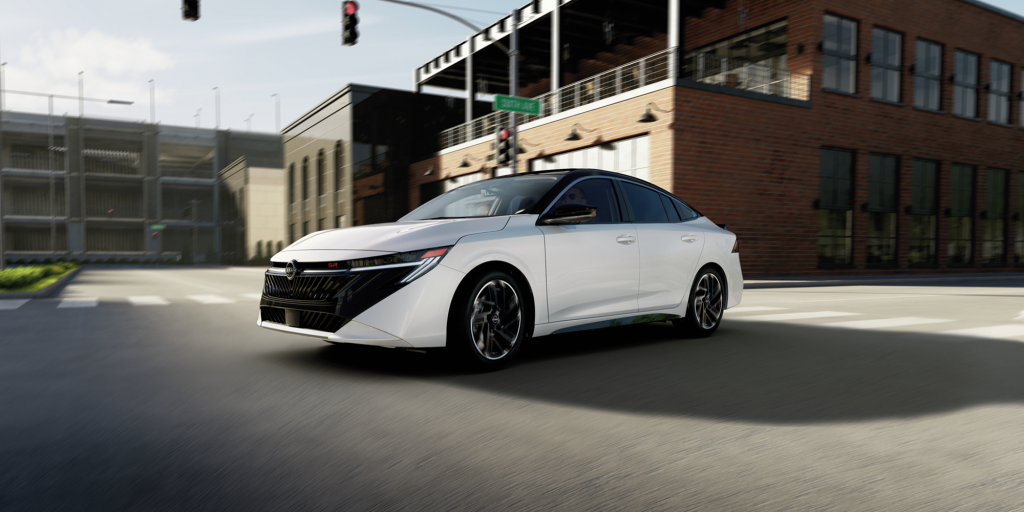
Exterior styling is another defining factor in the Nissan Sentra vs. Honda Civic conversation. The Honda Civic features a low, wide stance with sculpted body lines, available LED lighting, and bold wheel designs, especially in sport-focused trims. Meanwhile, the Nissan Sentra presents a sleek, aerodynamic silhouette with crisp lines and an athletic presence. Its confident stance complements its efficient performance, giving drivers an economy car that looks far from basic. In a Nissan Sentra vs. Honda Civic comparison focused on everyday appeal, both deliver eye-catching design, but the Nissan Sentra’s clean, modern aesthetic pairs seamlessly with its practical efficiency.
Interior Comfort and Technology
Step inside, and the Nissan Sentra vs. Honda Civic evaluation continues with comfort and connectivity. The Nissan Sentra seats up to five passengers and offers up to 14.3 cu.ft. of trunk space and more with its 60/40-split fold-down rear seats, providing versatile cargo space for groceries, luggage, or daily essentials. The Honda Civic also seats five and offers a spacious interior layout up to 14.8 cu.ft., but the Nissan Sentra’s thoughtful cabin packaging ensures that its interior layout never feels cramped.
Seating comfort is a highlight in this Nissan Sentra vs. Honda Civic comparison. The Nissan Sentra features a six-way adjustable driver’s seat and a four-way adjustable front passenger seat as standard equipment. Available upgrades include Sport Leatherette seat trim with contrast stitching, as well as an available leather-wrapped steering wheel and shift knob for an elevated feel. The Honda Civic offers available leather-trimmed seating and a leather-wrapped steering wheel, creating a refined atmosphere. While both provide upscale options, the Nissan Sentra’s supportive Zero Gravity seating design and driver-centric layout contribute to confident comfort on long drives.
Technology plays a central role in any modern Nissan Sentra vs. Honda Civic evaluation. The Nissan Sentra includes Apple CarPlay® integration and Android Auto™ compatibility as standard features, along with an available dual-integrated 12.3-in. monolith display and Bose Premium Audio. The Honda Civic also offers Apple CarPlay® and Android Auto™, with wireless integration available, plus an optional 12-speaker Bose Premium Sound System. With both models offering similar tech features, the Nissan Sentra ensures strong smartphone connectivity and intuitive controls across its lineup, reinforcing its value-driven appeal—not to mention extra features like Active Noise Cancellation and Active Sound Enhancement.
Safety First
Safety is where the Nissan Sentra truly distinguishes itself in this Nissan Sentra vs. Honda Civic comparison. Every Nissan Sentra comes standard with Nissan Safety Shield® 360, which includes Automatic Emergency Braking with Pedestrian Detection, Blind Spot Warning, Lane Departure Warning, Rear Cross Traffic Alert, Rear Automatic Braking, and High Beam Assist. Available features such as ProPILOT Assist, Intelligent Forward Collision Warning, and Intelligent Cruise Control add even more driver assistance support.
The Honda Civic comes standard with Honda Sensing®, featuring Collision Mitigation Braking System™, Road Departure Mitigation System, Adaptive Cruise Control with Low-Speed Follow, Lane Keeping Assist System with Traffic Jam Assist, and Traffic Sign Recognition. While both vehicles deliver comprehensive safety tech, the Nissan Sentra’s standard inclusion of Blind Spot Warning and Rear Cross Traffic Alert across the lineup provides an added layer of everyday awareness that enhances overall peace of mind. In discussions surrounding Nissan Sentra vs. Honda Civic reliability, comprehensive safety systems often play a significant role in long-term ownership satisfaction.
Choosing Confidence and Everyday Value
As this Nissan Sentra vs. Honda Civic comparison illustrates, both sedans deliver impressive performance, efficiency, and modern technology in the compact sedan segment. The Honda Civic offers slightly more horsepower and available premium upgrades, but the Nissan Sentra answers with excellent fuel efficiency, well-rounded standard features, and a comprehensive suite of driver assistance technology included on every model.
In this detailed Nissan Sentra vs. Honda Civic specs breakdown, the differences are subtle rather than dramatic. The Nissan Sentra’s efficient powertrain, up to 38 MPG on the highway, and standard Nissan Safety Shield® 360 create a strong foundation for daily commuting and weekend travel alike. Add in its versatile trunk space, intuitive infotainment system, and refined cabin design, and it becomes clear why many drivers gravitate toward the Nissan Sentra when conducting model comparisons. When evaluating Nissan Sentra vs. Honda Civic reliability, both brands carry strong reputations, but the Nissan Sentra’s thoughtful engineering, safety-first approach, and value-driven trim structure make it especially appealing for drivers seeking long-term confidence. In the world of compact cars, the Nissan Sentra stands out as a smart, stylish, and efficient option that balances practicality with modern sophistication. If you’re still narrowing down your Nissan Sentra vs. Honda Civic decision, the best way to experience the difference is from behind the wheel. Visit Crossroads Nissan of Wake Forest today to explore available trim levels and see firsthand how the Nissan Sentra can elevate your daily drive.
*EPA Fuel Economy Estimates. Actual mileage may vary with driving conditions—use for comparison only.
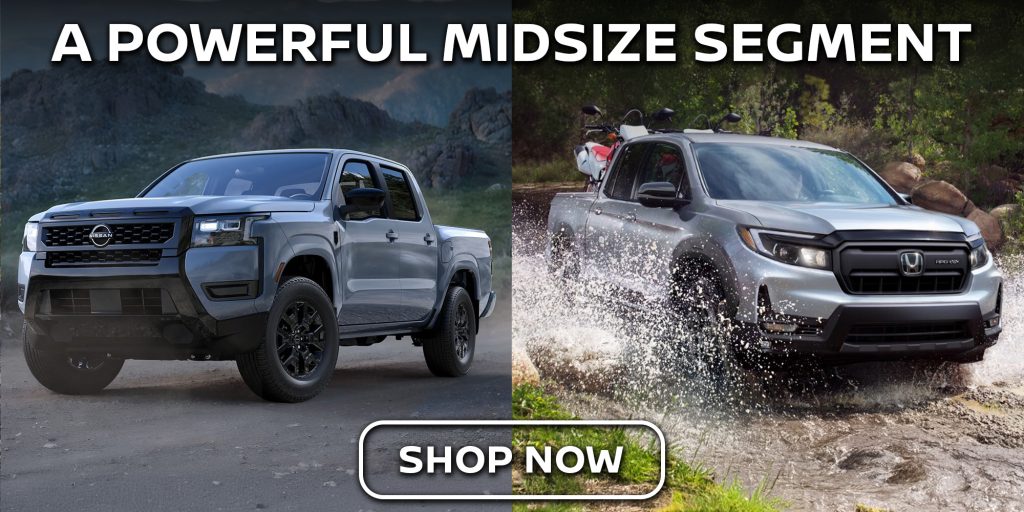
Two Midsize Trucks Built For Work And Everyday Life
When it comes to choosing between two well-equipped midsize pickup models, the conversation often centers on capability, comfort, and long-term value. In this detailed look at the Nissan Frontier vs. Honda Ridgeline, both trucks prove they’re ready to support busy lifestyles, including towing a trailer, loading up tools for the job site, or serving as a dependable daily driver. As modern pickup trucks continue to evolve, today’s drivers expect both strength and refinement in one well-balanced package.
The Nissan Frontier stands out as a bold, body-on-frame midsize truck engineered for durability and confident performance. Designed with rugged capability in mind, it’s built for truck owners who value traditional truck toughness alongside modern connectivity. The Honda Ridgeline, by contrast, blends pickup versatility with SUV-like comfort, offering a unibody design aimed at smooth commuting and family-friendly usability. For shoppers comparing the Nissan Frontier vs. Honda Ridgeline, the decision often comes down to how much emphasis they place on classic frame truck construction versus crossover-inspired ride quality.
Both models are versatile enough to serve as a solution for weekday commuting and weekend recreation alike. Still, drivers seeking a truck that feels purpose-built for hard work and serious off-road exploration will appreciate what the Nissan Frontier brings to the table. To experience the difference firsthand, visit Crossroads Nissan of Wake Forest for a test drive to see which midsize pickup best fits your lifestyle.
Power & Capability for All Demands
A close look at the Nissan Frontier vs. Honda Ridgeline specs reveals distinct engineering philosophies. The Nissan Frontier is powered by a standard 3.8L V6 engine producing 310 horsepower, paired with an automatic transmission for smooth, confident shifts. This V6 engine delivers robust output ideal for hauling equipment or merging onto highways with authority. The Honda Ridgeline features a 280-horsepower direct-injection V6 engine paired with a nine-speed automatic transmission, producing 262 lb.-ft. of torque. While both trucks offer capable performance, the Nissan Frontier provides more horsepower, giving it an edge for drivers who prioritize strong acceleration and overall muscle.
Towing capability is another key differentiator in the Nissan Frontier vs. Honda Ridgeline comparison. When properly equipped, the Nissan Frontier offers a maximum towing capacity of up to 7,150 lbs., along with a maximum payload capacity of 1,620 lbs. The Honda Ridgeline delivers up to 5,000 lbs. of maximum towing capacity and includes a standard integrated tow hitch with a seven-pin connector. For drivers who regularly haul boats, campers, or work trailers, the higher towing threshold of the Nissan Frontier reinforces its reputation as a traditional truck built for demanding tasks.
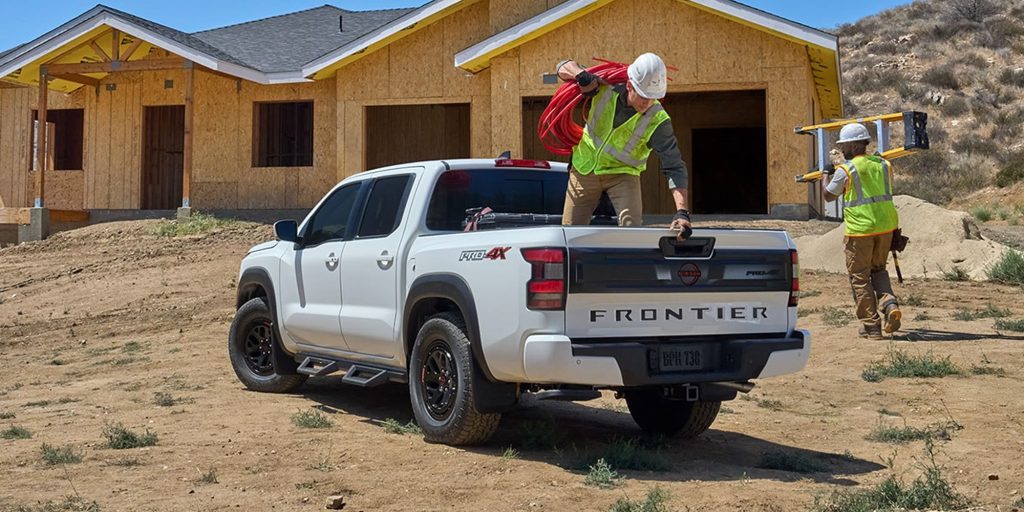
Confident Design
Construction also plays a major role in the Nissan Frontier vs. Honda Ridgeline comparison. The Nissan Frontier utilizes a ladder frame design, underscoring its identity as a body-on-frame midsize truck engineered for durability and strength. Available rugged equipment, including skid plates and specialized off-road-focused trims like the Nissan Frontier PRO-4X®, further enhance its capability for serious off-road adventures. The Honda Ridgeline, with its unibody construction and fully independent front and rear suspensions, emphasizes composed ride quality and reduced vibration. While that setup contributes to smooth handling, many shoppers comparing Nissan Frontier vs. Honda Ridgeline reliability may favor the time-tested durability associated with a frame truck platform on the Nissan Frontier.
On the exterior, the Nissan Frontier projects strength with muscular lines, an aggressive stance, and has multiple cab and bed length configurations that are designed to tailor to your specific needs. The Honda Ridgeline, however, boasts sharper lines, but has only one cab size that blends truck presence with everyday approachability. In evaluating Nissan Frontier vs. Honda Ridgeline, those who value a rugged, purpose-driven design may gravitate toward the more assertive styling of the Nissan Frontier.
An Interior Space For You
Inside the cabin, the Nissan Frontier and Honda Ridgeline offer thoughtful comfort and connectivity. Both can seat up to five passengers, and while the Honda Ridgeline offers a more refined SUV-like interior, the Nissan Frontier counters with a purpose-built cabin. This blends modern comfort with durable materials and practical design, making it especially appealing for drivers who want a truck that feels ready for both demanding workdays and weekend adventures.
Technology is central to the experience in both Nissan Frontier vs. Honda Ridgeline interiors. Touchscreen display sizes vary: standard 7-in. and optional 9-in. on the Honda Ridgeline, standard 8-in. and available 12.3-in. on the Nissan Frontier, each compatible with Apple CarPlay® and Android Auto™ integration. The Honda Ridgeline streamlines this compatibility, but the Nissan Frontier takes connectivity a step further. Thanks to NissanConnect®, this system unifies all elements of your truck-driving experience whether it’s smartphone integration, safety features, or truck-oriented features. This allows you to seamlessly transition between job sites, highways, or off-road environments
No Compromises on Safety
Safety is another strong point for the Nissan Frontier vs. Honda Ridgeline. The Nissan Frontier comes standard with Nissan Safety Shield® 360, while the Honda Ridgeline offers a comprehensive suite through Honda Sensing®. These standard suites highlight each model’s commitment to value and everyday peace of mind in the ongoing Nissan Frontier vs. Honda Ridgeline conversation.
Cargo solutions further distinguish the two. The Honda Ridgeline offers a dual-action tailgate and a lockable In-Bed Trunk® for added versatility. The Nissan Frontier counters with an available Utili-track® Channel System and spray-in bedliner, emphasizing secure cargo management and long-term durability for truck bed use. For drivers focused on rugged hauling capability, the Nissan Frontier’s work-ready design remains a compelling advantage in any Nissan Frontier vs. Honda Ridgeline evaluation.
The Confident Choice for Capability and Value
Ultimately, the decision between these two midsize truck contenders comes down to priorities. The Honda Ridgeline delivers refined ride characteristics, innovative cargo features, and a comfortable cabin suited for commuting and family life. However, the Nissan Frontier distinguishes itself with greater horsepower, higher towing capacity, a durable ladder frame foundation, and more truck-based output. For shoppers carefully studying Nissan Frontier vs. Honda Ridgeline specs, the Nissan Frontier demonstrates clear advantages in raw capability and traditional truck engineering. It offers the strength, versatility, and proven construction many drivers expect from a true midsize pickup. Whether navigating daily responsibilities or heading toward off-road terrain, the Nissan Frontier is built for work and ready for play.If you’re weighing your options in the competitive Nissan Frontier vs. Honda Ridgeline segment, we invite you to visit Crossroads Nissan of Wake Forest to explore the Nissan Frontier in person. Get behind the wheel, experience its confident power, and see how this capable midsize truck can elevate your everyday drive.
*EPA Fuel Economy Estimates. Actual mileage may vary with driving conditions—use for comparison only.
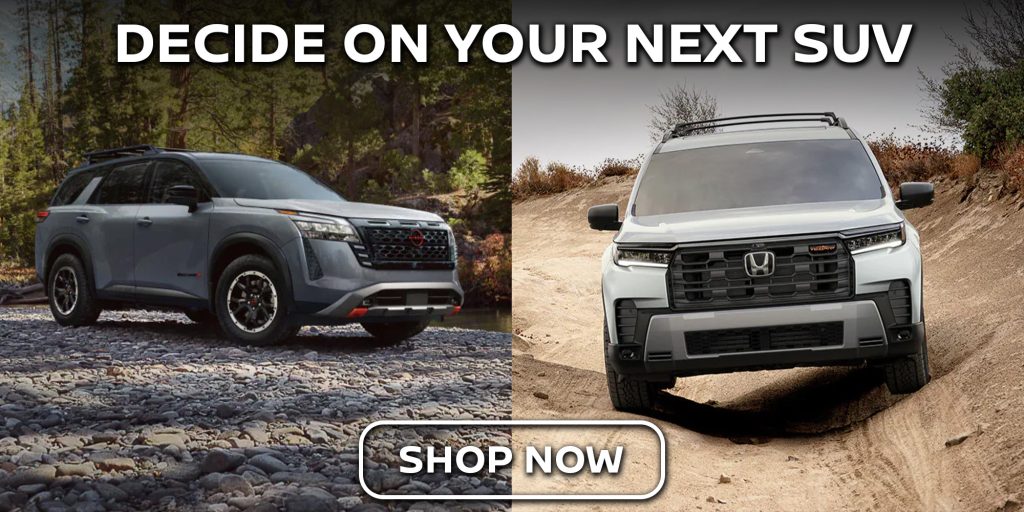
Comparing Top Three-Row SUVs: Nissan Pathfinder & Honda Pilot
When it comes to choosing between the Nissan Pathfinder and Honda Pilot, these two top contenders in the three-row SUV category offer a lot for families and adventure enthusiasts alike. Both vehicles are designed to cater to family life with spacious interiors, advanced features, and reliable performance, making them ideal for road trips or daily commutes. In a segment filled with strong competitors, the Nissan Pathfinder vs. Honda Pilot stand out for their reliability, advanced technology, and thoughtful design. With roomy interiors and ample cargo space, they continue to meet the evolving needs of modern drivers. If you’re in the market for a versatile and dependable SUV, this blog from Crossroads Nissan Wake Forest gives you a closer look at why the Nissan Pathfinder is the better choice. Schedule a test drive with us today!
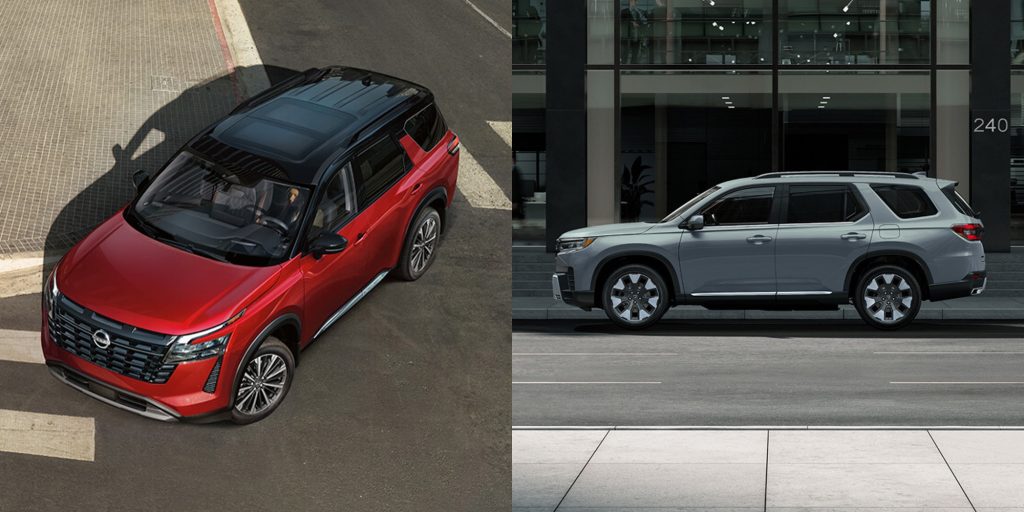
Performance & Driving Dynamics
Under the hood, both the Nissan Pathfinder vs. Honda Pilot feature a powerful engine designed to handle a variety of driving conditions. While the Honda Pilot offers a slightly more robust V6 engine with 285 horsepower and 262 lb.-ft. of torque, the Nissan Pathfinder is capable of reaching up to 284 horsepower and 259 lb.-ft. of torque. Both engines are paired with a smooth automatic transmission for a refined driving experience. That near-equal output gives the Nissan Pathfinder comparable performance with added confidence for everyday driving and towing up to 6,000 lbs. The Honda Pilot, on the other hand, offers a towing capacity of up to 5,000 lbs. Drivers who prioritize towing capability may lean toward the Nissan Pathfinder, particularly its Rock Creek® trim level, which is designed for enhanced off-road capability. Roof rails are available on both models, adding extra utility for carrying larger items like bikes or kayaks. Additionally, the third row in each SUV folds down flat, creating a more versatile cargo area for bulky items. Whether you’re packing for a family road trip or managing errands, the flexibility of these vehicles makes them practical options for any lifestyle.
The Nissan Pathfinder vs. Honda Pilot reliability is enhanced by multiple drive modes that adapt to varying terrains and weather conditions. The Nissan Pathfinder’s available 4×4 system provides excellent traction and control, especially in off-road scenarios, while the Honda Pilot features an available all-wheel-drive system that performs well on slick roads. With a nine-speed automatic transmission, the Nissan Pathfinder delivers smooth and responsive shifts, contributing to a comfortable ride. The Honda Pilot also offers a smooth driving experience, with precise steering and a slightly tighter turning diameter, making it easier to maneuver in tight spaces. Overall, the Nissan Pathfinder emphasizes ride comfort and smoothness for everyday driving.
The Nissan Pathfinder vs. Honda Pilot are ideal options for city and highway driving. The Honda Pilot has an EPA-estimated 19 MPG in the city and 27 MPG on the highway for its 2WD models, while the Nissan Pathfinder achieves an estimated 21 MPG for city commutes and 27 MPG on highways.* These Nissan Pathfinder vs. Honda Pilot specs make the Nissan Pathfinder a discernible choice for those who prioritize fuel efficiency.
Interior Comfort, Technology, & Safety
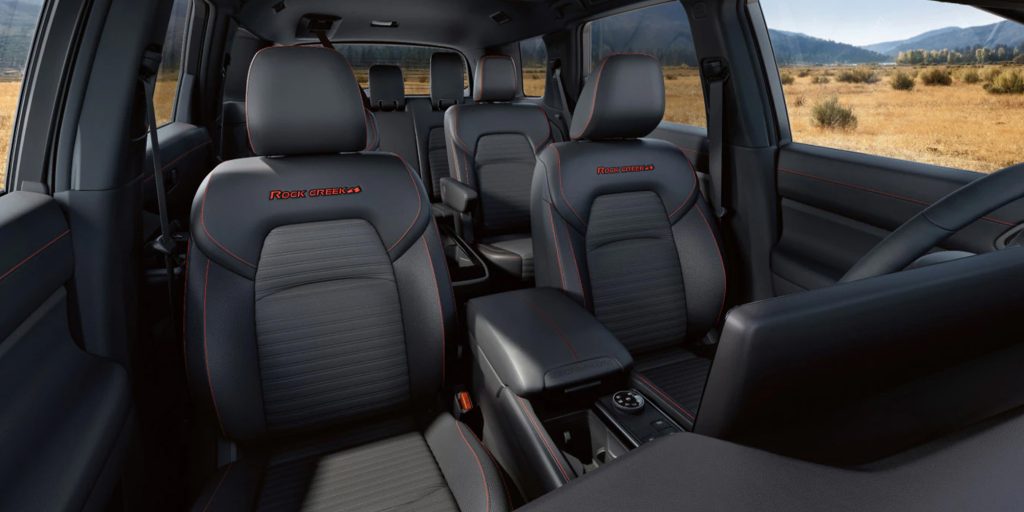
Inside the cabin, both the Nissan Pathfinder and Honda Pilot are designed to accommodate busy families with flexible seating for up to eight passengers and spacious three-row layouts. The Nissan Pathfinder distinguishes itself with a more refined, driver-focused interior that emphasizes comfort and usability across all rows. Nissan’s available semi-aniline leather-appointed seating, contrast stitching, and thoughtful trim accents give the Nissan Pathfinder a more upscale feel, especially in higher trims like Platinum. The EZ FLEX® second-row seating system adds everyday convenience by allowing easy access to the third row—even with a child seat installed—making the Nissan Pathfinder particularly family-friendly. The Nissan Pathfinder vs. Honda Pilot sizes differ, with the Honda SUV offering competitive interior space and slightly more overall cargo capacity when fully configured for hauling. The Nissan Pathfinder’s well-shaped cargo area and flat-folding rear rows prioritize real-world versatility and ease of loading. Combined with supportive front seats and a quieter ride quality, the Nissan Pathfinder creates an interior environment that feels comfortable, composed, and ready for long trips.
Technology and connectivity play a major role in daily driving, and the Nissan Pathfinder vs. Honda Pilot comparison leans into intuitive, confidence-building features that enhance the overall experience. The Nissan Pathfinder is equipped with a modern infotainment system that supports Apple CarPlay® and Android Auto™, along with multiple USB ports throughout the cabin to keep devices charged for every passenger. Available upgrades include wireless smartphone connectivity, a premium Bose® audio system, and a large digital driver display that puts key vehicle information directly in the driver’s line of sight. These features work together to reduce distractions and keep the focus on the road. The Honda Pilot also offers a capable infotainment setup and the same size touchscreen, but the Nissan Pathfinder’s clean interface, responsive controls, and available head-up display give it a more streamlined, driver-centric feel. For drivers who value technology that enhances comfort without feeling overwhelming, the Nissan Pathfinder strikes an ideal balance between innovation and ease of use.
Safety is an area where the Nissan Pathfinder vs. Honda Pilot perform strongly, but the Nissan SUV stands out by making advanced driver-assist technologies a core part of the driving experience. Every Nissan Pathfinder comes equipped with Nissan Safety Shield® 360, which includes Automatic Emergency Braking with Pedestrian Detection, Blind Spot Warning, Rear Cross Traffic Alert, Lane Departure Warning, High Beam Assist, and more. ProPILOT Assist includes Adaptive Cruise Control with lane-centering support, helping reduce driver fatigue during highway travel and long commutes. The Honda Pilot offers a similarly comprehensive suite of safety features through Honda Sensing®, but the Nissan Pathfinder’s combination of standard equipment and available hands-on assistance technologies provides a greater sense of confidence behind the wheel. Even when the Honda Pilot matches or slightly exceeds certain specifications, the Nissan Pathfinder’s smooth ride, composed handling, and driver-assist integration reinforce its role as a reassuring and capable family SUV. Together, these qualities make the Nissan Pathfinder a compelling choice for drivers who want safety, comfort, and everyday practicality working seamlessly in their favor.
The Path to Greatness
When comparing the Nissan Pathfinder vs. Honda Pilot, both SUVs bring impressive strengths to the table. The Honda Pilot remains a solid option for those seeking a capable three-row SUV, but the Nissan Pathfinder stands out as the more well-rounded choice with its higher available towing capacity, refined interior design, intuitive technology, and confidence-inspiring safety features. If you’re ready to experience everything the Nissan Pathfinder has to offer, visit Crossroads Nissan Wake Forest today to explore our available inventory, take a test drive, and find the Nissan Pathfinder that fits your lifestyle.
*EPA Fuel Economy Estimates. Actual mileage may vary with driving conditions—use for comparison only.
The Ultimate SUV Comparison
When comparing the Nissan Rogue vs. the Honda CR-V, both SUVs offer exceptional value and performance for all your drives throughout Wake Forest, NC, and beyond. However, understanding the differences in features, engine performance, and comfort can help you make the right decision. Whether you prioritize fuel efficiency, advanced safety technology, or interior space, both models provide strong options for a variety of driving needs. This buyer’s guide will compare the Nissan Rogue and Honda CR-V across key categories, including performance, interior space, and technology, to help you determine which SUV aligns best with your personal preference and lifestyle. Let’s dive into the details to see how these popular SUVs stack up against each other. Visit Crossroads Nissan of Wake Forest to test drive the latest Nissan Rogue and see firsthand how it outperforms the competition.
Performance and Engine Options
Power and Engine Displacement
The Nissan Rogue comes equipped with a 1.5L three-cylinder VC-Turbo® engine that delivers an impressive 201 horsepower and 225 lb.-ft. of torque. This advanced engine design offers a unique combination of power and efficiency, making it a standout feature in the compact SUV segment. On the other hand, the Honda CR-V is powered by a 1.5L four-cylinder engine that produces 190 horsepower and 179 lb.-ft. of torque. While the Honda CR-V’s engine provides reliable performance, it lacks the innovative variable compression technology found in the Nissan Rogue’s powertrain. The Nissan Rogue’s powertrain not only boosts performance but also ensures a smooth driving experience, whether you’re navigating city streets or cruising on the highway.
Fuel Efficiency and Driving Conditions
One of the key factors to consider when comparing the Nissan Rogue vs. the Honda CR-V is fuel efficiency. The Nissan Rogue offers better fuel economy, achieving up to 29 MPG in the city and 37 MPG on the highway.* This combined MPG rating of 33 MPG surpasses the Honda CR-V and other SUVs in its class, making the Nissan Rogue an excellent choice for those seeking better fuel economy. In contrast, the Honda CR-V offers respectable fuel economy but falls short of the Nissan Rogue’s efficiency, particularly on the highway, with an EPA-estimated highway MPG of 33.
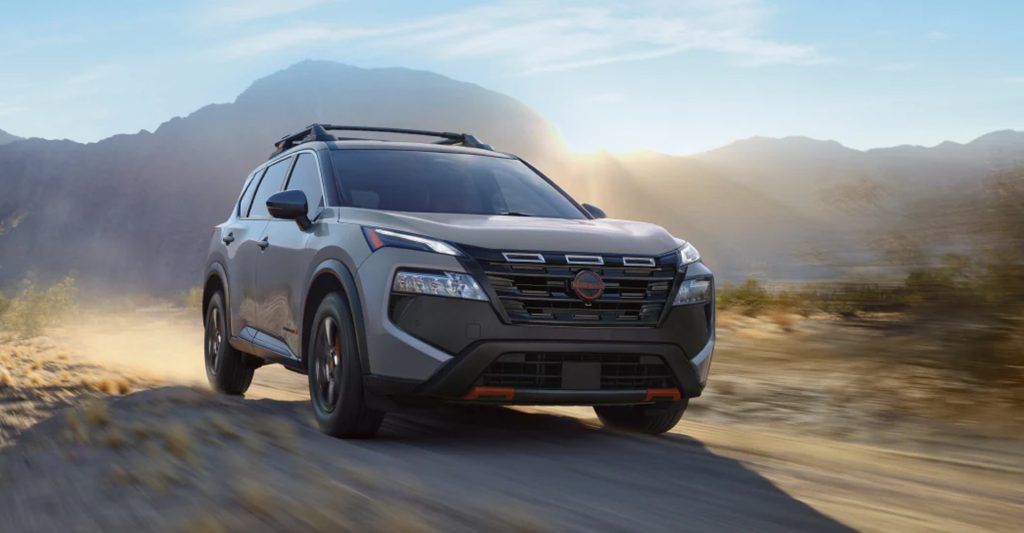
The Nissan Rogue is built to handle a wide range of driving conditions with ease. Its Intelligent All-Wheel Drive system enhances traction and stability, delivering confident control on wet roads, snowy streets, and uneven terrain. With selectable drive modes, drivers can fine-tune performance to match their journey, whether prioritizing efficiency for daily commutes or capability for more demanding roads. A smooth, continuously variable transmission further elevates ride comfort, making the Nissan Rogue equally at home in the city or off the beaten path. Drive modes such as Eco, Sport, Snow, and Off-Road offer added versatility, while the Nissan Rogue Rock Creek® trim takes adventure a step further with rugged all-terrain tires, roof rack upgrades, and an off-road mode, underscoring the Nissan Rogue’s balance of efficiency and capability.
By combining its efficient three-cylinder engine with advanced driving technologies, the Nissan Rogue proves to be a versatile and fuel-efficient option. Whether you’re looking for a practical daily driver or a capable road trip companion, the Nissan Rogue delivers on all fronts.
Interior Space and Comfort
When it comes to interior space, both the Nissan Rogue and Honda CR-V offer seating for five passengers. However, the Nissan Rogue stands out by providing more front leg room and head room, ensuring a comfortable experience for taller drivers and passengers. The front seats in the Nissan Rogue are designed with ergonomics in mind, offering excellent support for long drives. In contrast, while the Honda CR-V also features a well-designed cabin, it does not match the Nissan Rogue’s generous front leg and headroom. In addition to its superior seating comfort, the Nissan Rogue offers a spacious interior that rivals larger SUVs. The second row in the Nissan Rogue provides ample space for passengers, ensuring that everyone can enjoy a relaxed and comfortable ride.
Cargo Volume and Storage Solutions
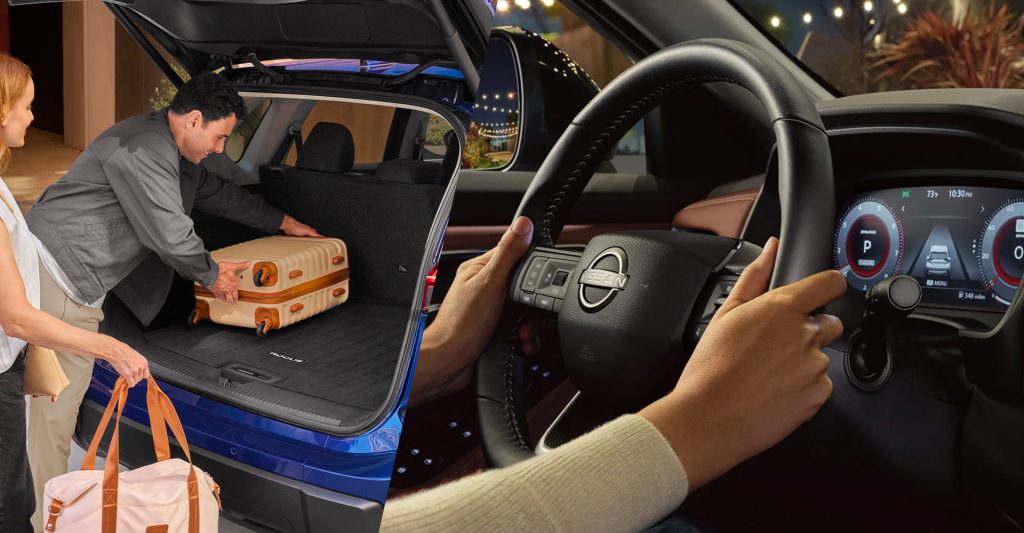
Cargo capacity is another crucial factor for SUV buyers, and both the Nissan Rogue and Honda CR-V deliver in this area. The Honda CR-V offers a maximum of 76.5 cu.ft. of cargo volume, slightly edging out the Nissan Rogue’s 74.1 cu.ft.. However, the Nissan Rogue compensates with its innovative cargo system, which includes adjustable floor panels and under-floor storage compartments. These storage solutions make it easier to organize and access your belongings, providing added convenience for busy lifestyles.
Furthermore, the Nissan Rogue’s cargo area is designed with flexibility in mind. Whether you’re transporting groceries, sports equipment, or luggage for a family trip, the Nissan Rogue’s versatile cargo space can accommodate your needs. The inclusion of roof rails on certain trim levels also enhances its practicality, providing additional storage when needed. You can also opt for the available Motion-Activated Liftgate, which opens your trunk hands-free. While the Honda CR-V offers excellent cargo volume, it lacks the thoughtful design elements that make the Nissan Rogue’s cargo area so user-friendly. You get more variety with the Nissan Rogue’s cargo space, especially with its available cargo system. The Divide-N-Hide® cargo system offers six smart configurations to help you organize and make the most of its 36.5 cu.ft. of cargo space behind the rear seats.
Overall, the Nissan Rogue’s focus on comfort, interior space, and storage solutions makes it a standout choice for those who prioritize a spacious and practical cabin. Whether you’re driving solo or with family, the Nissan Rogue ensures a comfortable and convenient experience for all.
Technology and Infotainment Features
The Nissan Rogue leads the way in technology with its state-of-the-art infotainment system. It features a large 12.3-in. touchscreen display, which is significantly larger than the Honda CR-V’s 9-in. touchscreen available on higher trims. The Nissan Rogue’s system includes wireless Apple CarPlay® and Android Auto™ as standard features, providing seamless smartphone integration without the hassle of cables. These advanced connectivity options ensure that drivers and passengers can stay connected and entertained on the go.
The Nissan Rogue delivers a more immersive and value-driven in-cabin experience, starting with its larger touchscreen and available BOSE® Premium Sound System that elevates every drive with rich, high-quality audio. Available satellite radio adds even more entertainment options, giving drivers easy access to music, news, and talk radio on the go.
While the Honda CR-V offers popular features like wireless smartphone integration and select premium amenities primarily in higher trims, the Nissan Rogue includes many comparable technologies as standard or more accessible options across its lineup. Features such as advanced connectivity, upscale interior materials, and a comfort-focused design come together seamlessly, making the Nissan Rogue the smarter choice for drivers who want cutting-edge technology and premium touches without upgrading to top-tier trims.
Another standout feature of the Nissan Rogue is the availability of a head-up display that projects critical driving information onto the windshield for easy visibility. This feature minimizes distractions by keeping your eyes on the road. With its advanced infotainment system and additional features such as USB charging and connectivity, the Nissan Rogue delivers a modern, user-friendly driving experience.
Driver Assistance and Safety Technology
Safety technology is a critical consideration when choosing an SUV, and both the Nissan Rogue and Honda CR-V offer a range of driver-assistance features.
The Nissan Rogue also leads the pack with its suite of safety technology. Nissan Safety Shield® 360, which includes Automatic Emergency Braking with Pedestrian Detection, Rear Automatic Braking, Rear Cross-Traffic Alert, Blind Spot Warning, Lane Departure Warning, and High Beam Assist, comes standard across all trims. These features, coupled with ProPILOT Assist 2.0 and Intelligent Cruise Control, elevate the driving experience and provide peace of mind on all your daily commutes in Wake Forest, NC. While Honda Sensing® in the Honda CR-V offers similar safety features with Collision Mitigation Braking System™, Road Departure Mitigation System, and Adaptive Cruise Control, the Nissan Rogue goes a step further with more intuitive systems and additional conveniences, such as parking sensors and a 360-degree camera. Its available 3D Enhanced Intelligent Around View Monitor, which allows you to rotate the camera view around the vehicle, giving you greater awareness of your surroundings with the inclusion of Invisible Hood View, providing a clear look beneath the front of the vehicle to help you confidently avoid obstructions and hard-to-see curbs.
The Nissan Rogue also offers Nissan ProPILOT Assist 2.1 with Intelligent Cruise Control, enhancing the driving experience with semi-autonomous capabilities. This advanced system is particularly useful in highway driving conditions, helping maintain a safe distance from other vehicles and keeping the SUV centered in its lane. The Nissan Rogue’s ProPILOT Assist 2.1 system offers a more seamless and intuitive experience than the Honda Sensing® safety suite, giving it an edge in driver-assistance technology.
Whether you’re navigating crowded city streets or traveling on the highway, the Nissan Rogue’s advanced safety features provide peace of mind in a variety of driving conditions.
Trim Levels and Customization
The Nissan Rogue offers a range of trim levels to cater to different preferences and budgets. At the top of the lineup, the Nissan Rogue Platinum trim provides a luxurious driving experience with premium features. Highlights of this trim include quilted semi-aniline leather seats, Tri-Zone Climate Control, and a Dual Panel Panoramic Moonroof, creating a refined and comfortable cabin. The Nissan Rogue Platinum trim also includes advanced technology, such as a head-up display, making it an ideal choice for buyers seeking a high-end SUV.
For those looking for a balance of value and features, the Nissan Rogue SV trim is a popular option. It comes with standard features like roof rails, a continuously variable transmission, and Nissan’s flexible cargo system, ensuring a smooth ride and ample practicality. With multiple trims to choose from, the Nissan Rogue lineup offers something for everyone, from budget-conscious shoppers to those seeking premium amenities.
Nissan Rogue Additional Options
The Nissan Rogue lineup offers standout personalization options, including eye-catching two-tone paint combinations and rugged Rock Creek® styling. The Nissan Rogue Rock Creek® trim features 17-in. dark-painted aluminum-alloy wheels paired with 235/65R17 all-terrain tires, along with Hill Descent Control that automatically manages speed and braking for a more controlled, confident descent. Inside, exclusive Rock Creek leatherette-appointed seats with contrast stitching and distinctive badging add a refined yet adventurous touch. These customization choices make it easy to tailor the Nissan Rogue to your lifestyle and design preferences. Whether you’re drawn to bold styling or capability-focused features, the Nissan Rogue offers a wide range of trims and options that deliver both personality and practicality, cementing its place as a versatile, adaptable SUV built for everyday life and weekend adventures alike.
Why the Nissan Rogue Stands Out
The Nissan Rogue stands out against competitors like the Honda CR-V by delivering what compact SUV shoppers value most: exceptional efficiency, advanced technology, and everyday versatility. With up to 37 MPG on the highway, the Nissan Rogue outperforms key rivals and even some larger SUVs, making it an ideal choice for commuters and road-trip enthusiasts alike. Its advanced safety features, smooth ride quality, and intelligent driver-assist technologies inspire confidence in every driving situation. Inside, the Nissan Rogue offers a spacious, well-designed cabin with flexible cargo solutions that easily adapt to busy families and active lifestyles. A wide range of trims, from the well-equipped Nissan Rogue SV to the premium Nissan Rogue Platinum, allows drivers to find the right balance of comfort, style, and innovation. Efficient, adaptable, and thoughtfully engineered, the Nissan Rogue delivers outstanding value and remains a top contender in the compact SUV segment.
Test Drive A Winner
Ultimately, the Nissan Rogue excels by combining innovative technology, advanced safety features, and impressive fuel efficiency in a stylish, versatile package. Visit Crossroads Nissan of Wake Forest to explore the Nissan Rogue models, take a closer look at the available features, and take a test drive today.
*EPA Fuel Economy Estimates. Actual mileage may vary with driving conditions—use for comparison only.

Nissan Altima SL vs. SR: Explore the Perfect Trim
Choosing between the Nissan Altima SL vs. SR comes down to how you want your mid-size sedan to look, feel, and perform. Both trims build on the strengths of the Nissan Altima nameplate of efficiency, advanced safety, and modern technology, while delivering two very different personalities. Whether your priority is upscale comfort or athletic styling, understanding how each trim level is equipped helps ensure you choose the right fit. Visit Crossroads Nissan of Wake Forest to see which of the Nissan Altima SL vs. SR trims are for you.
Design and Exterior Styling Differences
As a long-standing Nissan model, the Nissan Altima offers a thoughtful balance of innovation and everyday usability, making it an appealing option for drivers shopping beyond the base model and into more feature-rich trim options. When looking at the Nissan Altima SL vs. SR comparison, there are some visual differences you’ll discover.
The Nissan Altima SL trim leans into elegance with refined exterior details that give the car a premium road presence. A black with chrome surround V-Motion grille anchors the front fascia, complemented by machine-finished aluminum-alloy wheels that add polish without looking overstated. At the top, a standard sliding and tilting moonroof reinforces the Nissan Altima SL’s upscale character.
By contrast, Nissan Altima SR features emphasize sport-inspired design cues. This trim stands out with black aluminum-alloy wheels and a dark chrome grille. These sleek elements add a visual edge, giving the Nissan Altima SR a bolder appearance among Altima models.
Interior Comfort and Cabin Experience
The interiors for the Nissan Altima SL vs. SR become even more distinguished, providing preferences that cater to different lifestyles.
Inside the Nissan Altima SL, comfort is the priority. Premium leather-appointed seats create a refined atmosphere, supported by four-way front passenger and eight-way driver power-adjustable seats with standard lumbar support that enhance long-distance comfort. A leather-wrapped steering wheel and thoughtful ergonomic design elevate the cabin beyond what’s expected in a mid-size sedan.
The Nissan Altima SR cabin takes a different approach, pairing a leatherette-wrapped steering wheel with supportive sport bucket seating and available integrated lumbar support for a more engaging feel. While still comfortable in sport cloth seats for daily use, the interior emphasizes connection to the road, aligning with the Nissan Altima SR’s athletic intent and overall driving experience.
Performance and Ride Quality
Both Nissan Altima SL vs. SR trims are powered by a responsive 2.5L four-cylinder engine that puts out 188 horsepower and 180 lb.-ft. of torque. This is paired with a continuously variable transmission designed for smooth acceleration and efficiency. While Nissan’s Xtronic CVT plays a major role in delivering seamless power delivery during city driving and highway cruising, systems like Active Ride Control and Intelligent Trace Control work behind the scenes to maintain stability and composure. You’ll also enjoy an EPA-estimated 27 MPG for city commutes and 37 MPG on the highway.*
Where the trims diverge is in ride tuning. The Nissan Altima SR features a sport-tuned suspension that sharpens handling response and adds confidence through corners. Paddle shifters further enhance driver engagement, offering manual-style control when desired. Meanwhile, the Nissan Altima SL focuses on ride comfort, allowing you to enjoy a smoother, more plush ride, especially over rough pavement or longer routes.
Technology and Convenience
Technology is a strong point for the Nissan Altima SL vs. SR trims, featuring the NissanConnect® services with a color display, intuitive multi-touch control, and smartphone integration through Wireless Apple CarPlay® and Android Auto™. The integrated audio system delivers clear sound and easy access to media, navigation, and vehicle settings. While the Nissan Altima SR has an 8-in. touchscreen as standard, the Nissan Altima SL trim is upgraded to a 12.3-in. screen. Whichever one you decide on, you’ll be able to enable access to vehicle features and alerts, including select text messages delivered through the infotainment system. These technologies make the newest Nissan Altima easier to integrate into a connected lifestyle. Both Nissan Altima SL vs. SR also include thoughtful features that enhance daily usability, such as a remote engine start system, a 7-in. multi-function information display to keep you informed, and illuminated steering wheel-mounted audio controls.
Both models feature an electronic parking brake with Automatic Brake Hold for stop-and-go traffic. The Nissan Altima SL trim has automatic temperature control, optional on the SR,, maintaining consistent cabin comfort regardless of outside conditions.
The Nissan Altima SL trim further adds convenience-focused technology, including Nissan Door to Door Navigation, which seamlessly connects your route planning between your vehicle and mobile device. Voice interaction is enhanced through Hello Nissan and Alexa Built functionality, allowing hands-free access to select features while on the move.
Advanced Safety and Driver Assistance
Safety remains a defining strength of the Nissan Altima SL vs. SR comparison. Both trims come equipped with Nissan Safety Shield® 360, which includes core driver-assist technologies such as Automatic Emergency Braking with Pedestrian Detection, Blind Spot Warning, Lane Departure Warning, Cross Traffic Alert, and more. Intelligent Forward Collision Warning and Intelligent Driver Alertness add another layer of reassurance by monitoring traffic patterns and driver behavior. Additional standard systems like Rear Automatic Braking, Rear Cross Traffic Alert, and High Beam Assist provide extra awareness in daily driving situations. Traffic Sign Recognition on the SL trim further supports driver confidence by displaying key roadway information directly in the instrument cluster.
If you’re looking for more premium safety features, the Nissan Altima SL trim builds on this foundation with ProPILOT Assist 1.0, which can help maintain speed and lane position in certain conditions.
Which One Is Right for You?
No matter which trim you choose, the Nissan Altima continues to be a compelling choice in the competitive mid-size sedan segment. The best way to decide between the Nissan Altima SL vs. SR is to schedule a test drive at Crossroads Nissan of Wake Forest to experience firsthand how each trim’s key features aligns with your preferences.The Nissan Altima SL is ideal for drivers who value refinement, advanced driver assistance, and upscale materials such as leather seats. Its focus on comfort, smooth ride quality, and premium technology makes it well-suited for commuters and long-distance travelers alike. The Nissan Altima SR, on the other hand, appeals to drivers drawn to dynamic styling and a more engaging feel behind the wheel. From its bold exterior accents to its performance-oriented suspension tuning, it delivers a more energetic personality while remaining practical for everyday use. Select yours from our Nissan dealer in Crossroads Nissan of Wake Forest today!
*EPA Fuel Economy Estimates. Actual mileage may vary with driving conditions—use for comparison only.

Platinum Reserve Refinement
The newest Nissan Armada sets the bar high in the full-size SUV segment. Thanks to the elite Nissan Armada Platinum Reserve package, your driving experience is elevated even further. With bold styling, premium materials, advanced technology, and genuine capability, the Nissan Armada Platinum Reserve package blends the power and presence you expect with the refinement you crave. At Crossroads Nissan of Wake Forest, we invite you to experience this standout model by scheduling your test drive today and discovering the difference for yourself.
Core Strengths
Before exploring the Nissan Armada Platinum Reserve package, it’s important to understand the foundation of the Nissan Armada. This full-size SUV is powered by a robust 3.5L twin-turbocharged V6 engine that delivers 425 horsepower and 516 lb.-ft. of torque. Mated to a nine-speed automatic transmission, the Nissan Armada offers confident capability whether you’re towing, transporting a full family or navigating urban terrain. With seating for up to eight and a body-on-frame construction rooted in durability, it stands out among large SUVs for both strength and premium utility. In terms of dimensions and fuel economy, the Nissan Armada spans approximately 209.6 in. in length and offers up to an EPA-estimated 20 MPG on the highway.* Standard features across the lineup include advanced connectivity like wireless Apple CarPlay® and Android Auto™, and the brand’s full suite of driver-assist technologies as part of the Nissan Safety Shield® 360. This baseline delivers the strong performance, spaciousness, and technology you would expect from the Nissan Armada. And now, the Nissan Armada Platinum Reserve package refines it further.
Premium Enhancements
When you choose the Nissan Armada with the Platinum Reserve package trim level, you unlock the foremost expression of this SUV. The engine and transmission remain the same, but you gain elevated materials, technology, and features that distinguish this trim. On the Nissan Armada Platinum Reserve, you’ll find quilted leather-appointed seating in the first and second rows, climate-controlled front seats, and ambient mood lighting throughout the cabin. The infotainment screen grows to a 14.3-in. display with full-function Google built-in and expansive connectivity via NissanConnect® Services. When looking at the Nissan Armada Platinum Reserve vs. Platinum trims, the Nissan Armada Platinum Reserve package offers all the luxury, technology, and premium detailing found in the Platinum trim, but elevates the experience with features like 22-in. wheels, adaptive air suspension, and other exclusive upgrades.
The Nissan Armada Platinum Reserve signifies stepping into the pinnacle of the line and embracing the most refined interpretation of the full-size SUV. Meanwhile, capability remains intact: eligible for either wheel-drive configuration, you’re able to tow up to 8,500 lbs. when properly equipped. The Adaptive Electronic Air Suspension, standard on this higher tier, allows ride-height adjustment to help achieve increased ground clearance when needed. In short, the Nissan Armada Platinum Reserve package transitions the model from merely capable to exceptionally refined, luxurious, and ready for anything.
Tailored to Your Lifestyle
Owning a Nissan Armada Platinum Reserve means living at the intersection of family-friendly space, upscale comfort, and real-world capability. Imagine driving your crew on a weekend getaway: with seats for eight, you can easily load friends, sports gear, or kids into the cabin. Large cargo space ensures that suitcases, coolers, and outdoor gear fit effortlessly. On arrival, the power liftgate makes loading and unloading a breeze. Meanwhile, the available premium paint and quilted leather interior deliver upscale style for both the daily school run and a night out on the town.
For towing a boat, trailer, or camper, the Nissan Armada Platinum Reserve package offers real utility. Off-road, or simply crossing less-maintained terrain at a resort or seaside access way, the adaptive suspension and variable ground clearance offer confidence and flexibility. In inclement weather or light off-road scenarios, the four-wheel drive system adds extra traction for peace of mind. Inside, the Nissan Armada Platinum Reserve package features convenience in the navigation system, while the NissanConnect Services ecosystem keeps you connected and on track. With comfort features like power-adjustable front seats and climate-controlled seating, long drives become relaxing, not tiring. When you’re driving in style, the Nissan Armada Platinum Reserve package elevates the everyday commute into something special. For a weekend road trip, the automatic transmission shifts seamlessly, and the responsive engine delivers a smooth yet powerful feel whether merging on the highway or overtaking with ease. And for family or friends in the second row, the heated outboard seats in the Nissan Armada Platinum Reserve package ensure everyone travels in comfort.
Experience the Nissan Armada
In summary, the Nissan Armada Platinum Reserve package delivers a full-size SUV experience that doesn’t compromise power, refinement, and utility. Visit Crossroads Nissan of Wake Forest today for a test drive to experience how the Nissan Armada Platinum Reserve package takes your SUV to the next level.
*EPA Fuel Economy Estimates. Actual mileage may vary with driving conditions—use for comparison only.
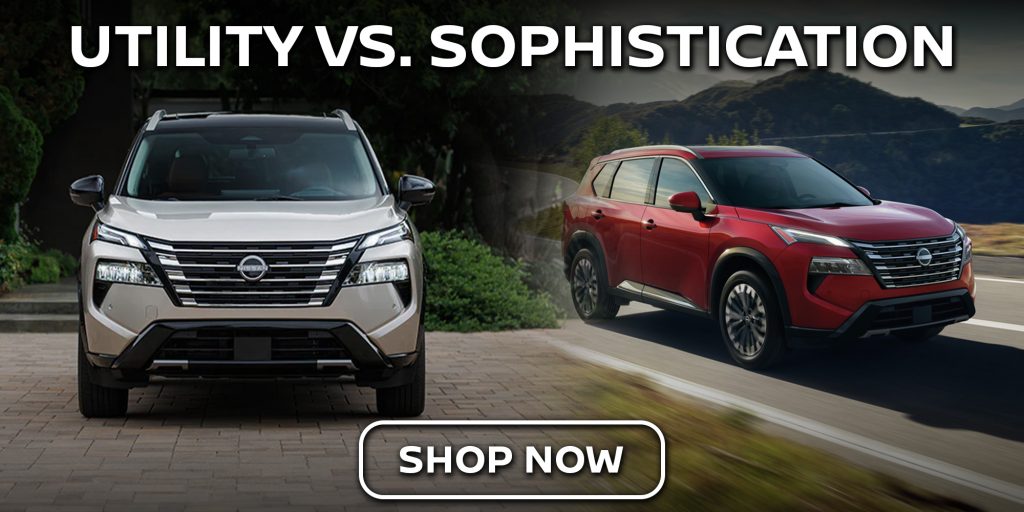
Choosing Between Classic & Luxury
For many shoppers comparing the Nissan Rogue SV vs. Platinum, the question isn’t whether one is better than the other, it’s which personality of this versatile SUV fits their daily life best. With the same core engineering under the hood, the real story in the Nissan Rogue SV vs. Platinum comparison is how each model balances value, comfort, and technology. Whether you’re just starting to explore Nissan Rogue trim options or already deep into researching, Crossroads Nissan of Wake Forest is ready to help you narrow in on the right fit and arrange a convenient test drive.
Designed For More
From the outside, it’s easy to see why many shoppers narrow their search to the Nissan Rogue SV vs. Platinum. Both share the same black grille with chrome accents, LED low/high beam headlights, and a clean front bumper treatment. When you take a look at the Nissan Rogue Platinum, it layers on more visual drama. The Nissan Rogue Platinum’s standard Dual Panel Panoramic Moonroof with power sunshade and expansive glass dramatically opens up the cabin with light. The Platinum trim is also upgraded to 19-in. aluminum-alloy wheels and outside mirrors with a reverse tilt-down feature and integrated turn signal indicators, while both Nissan Rogue SV vs. Platinum share heated mirrors and conventional rear doors for easy access. Everyday convenience is enhanced by power-operated cargo access, including a power liftgate that helps when your hands are full, and by thoughtful touches such as rear door sunshades for rear passengers.
Everyday Capability
The Nissan Rogue SV trim builds a strong foundation of standard features, while the Nissan Rogue Platinum focuses on premium materials, added convenience, and an elevated driving experience. Both Nissan Rogue SV vs. Platinum share the same 1.5L VC-Turbo® DOHC 12-valve three-cylinder engine and Xtronic CVT®, delivering confident strength at 201 horsepower and 225 lb.-ft. of torque. When you line up the Nissan Rogue SV vs. Platinum on paper, their performance specifications look almost identical, which is good news if you care about smooth, efficient commuting.
Front-wheel drive is standard on the Nissan Rogue SV, with all-wheel drive available. All-wheel drive comes standard on the Nissan Rogue Platinum trim, providing drivers in varying climates with extra confidence on wet or slippery roads. In terms of traveling for the Nissan Rogue SV vs. Platinum, an efficient 29 MPG in city driving and 36 MPG on the highway is the EPA-estimated fuel economy rating achieved by the Nissan Rogue SV, giving it a slight edge over the Platinum.* Because of their similar mechanical setups, the Nissan Rogue SV vs. Platinum will feel equally smooth and responsive on the highway. The choice between these trims is less about raw power and more about how you want that capability supported by comfort and technology in daily use.
Interior Comfort
The Nissan Rogue SV vs. Platinum benefit from strong standard features, allowing you to confidently focus on which combination of driver assistance, design, and cabin tech best fits your priorities. When you step inside, the contrast between the Nissan Rogue SV vs. Platinum cabins becomes much clearer. Both versions share a spacious layout with flexible cargo space. You’ll notice that the Nissan Rogue SV has another edge over its luxurious companion, offering up to 36.5 cu.ft. of space with all seats in place as opposed to the Nissan Rogue Platinum’s 36.3 cu.ft.—though both models can expand up to 72.9 cu. ft. of total cargo volume. In addition, the Nissan Rogue SV vs. Platinum has reclining, folding rear seats, making it well-suited for families, commuters, and weekend travelers alike. Rounding out daily convenience are more elements the Nissan Rogue SV vs. Platinum share, such as keyless entry via Nissan Intelligent Key, push button ignition, remote start, and NissanConnect® with Wi-Fi Hotspot.
The Nissan Rogue SV trim starts with durable cloth seating and available Prima-Tex® seat upholstery with the SV Premium Package, offering a practical and upscale ambience for families. On colder mornings, a heated steering wheel, available on the Nissan Rogue SV but standard on the Platinum, adds another layer of comfort, especially for long commutes or chilly school runs. By comparison, the Nissan Rogue Platinum trim wraps occupants in semi-aniline leather-appointed seats, creating a deluxe feel that reinforces its upscale positioning and supports both front seats on longer drives. A Driver Memory Seat is also standard for the Nissan Rogue Platinum owners, simplifying life if more than one person regularly drives the vehicle.
Intuitive Technology & Safety
Climate and seating adjustability also shift as you look into the Nissan Rogue SV vs. Platinum. Both models are equipped with Dual Zone Automatic Temperature Control System for easier, set-it-and-forget-it comfort, while a Tri-Zone option is available on Platinum. Features like USB ports, a Wi-Fi Hotspot, and an intuitive infotainment system help keep everyone connected on road trips and during daily errands. The Nissan Rogue SV uses an 8-in. infotainment system and a six-speaker audio setup. In contrast, the Nissan Rogue Platinum models receive a 12.3-in. infotainment system, a premium sound system with a 10-speaker Bose layout, wireless charging, and the reconfigurable LCD cluster.
In terms of confidence on the road, every Nissan Rogue SV vs. Platinum comparison begins with Nissan Safety Shield® 360, which is standard across the lineup and bundles key technologies like Automatic Emergency Braking with Pedestrian Detection to help monitor traffic and surroundings. Rear Automatic Braking and a rear sonar system add support when backing out of driveways or parking spaces, while features such as Hill Start Assist and Predictive Brake Assist help the driver in maintaining control on steep grades or in stop-and-go traffic and emergency stop situations.
On the Nissan Rogue Platinum, Nissan Safety Shield® 360 capabilities are expanded with Traffic Sign Recognition and Intelligent Around View® Monitor. Available ProPILOT Assist 2.1 builds on core ProPILOT Assist 1.1 concepts for even more safety features. Both models include ProPILOT Emergency Stop with e-call capability, available head-up display for key information, high beam assistance, and Platinum includes all-around coverage through a Front, Rear, and Side Sonar System, reinforcing the Nissan Rogue SV vs. Platinum gap for shoppers who want one of the most comprehensive assistance suites Nissan offered in the latest model year.
Final Thoughts
Ultimately, deciding between Nissan Rogue SV vs. Platinum comes down to how you prioritize comfort, technology, and luxury in your next ride. If you want a well-equipped SUV with impressive efficiency and strong safety features, the Nissan Rogue SV trim delivers a compelling balance of value and standard features. Drivers who crave premium materials and an elevated driving experience will enjoy the Nissan Rogue Platinum. By weighing these trim options side by side, you can decide which blend of features, Nissan Rogue SV vs. Platinum, best complements your lifestyle. To experience the differences in person, visit Crossroads Nissan of Wake Forest to explore these options up close and test drive today.
Utility Or Luxury? Finding Your Nissan Pathfinder
The Nissan Pathfinder SL vs. Platinum comparison highlights two of the strongest options in the new Nissan Pathfinder lineup, giving drivers a choice between elevated practicality and premium refinement. Whether your lifestyle leans toward family road trips, daily commuting, or outdoor exploring, both trims provide versatility, modern technology, and driver-focused comfort. With features designed for safety, convenience, and confidence on every journey, this Nissan SUV stands out as a reliable companion built for real-world needs. Visit Crossroads Nissan of Wake Forest for a test drive of the Nissan Pathfinder SL or Platinum to find your perfect match.
Why the Nissan Pathfinder Stands Out
Drivers considering the Nissan Pathfinder SL vs. Platinum comparison often begin by appreciating what makes the latest model so compelling. A robust V6 engine with direct injection gasoline technology powers every Nissan Pathfinder, delivering smooth acceleration and durability. The interior emphasizes comfort with available tri-zone automatic climate control, thoughtful interior trim, and roomy passenger seating. On the tech side, the Nissan Pathfinder adds premium touches like wireless Apple CarPlay®, Android Auto™, and a crisp color touch-screen display.
Safety is foundational, with Nissan Safety Shield® 360, including Lane Departure Warning, Pedestrian Detection, Blind Spot Warning, Rear Cross Traffic Alert, and Automatic Emergency Braking. With so many smart conveniences and driver-assistance features, from Intelligent Driver Alertness to Intelligent Forward Collision Warning, the Nissan Pathfinder is built for calm confidence and family-focused comfort.
The Nissan Pathfinder SL vs. Platinum both offer excellent highway MPG as well, making them appealing for family trips, commuting, and adventure travel alike. The Nissan Pathfinder SL offers an EPA-estimated 21 MPG in the city, 27 MPG on the highway, and 23 MPG combined, giving you an optimized driving experience. By contrast, the Nissan Pathfinder Platinum trails behind at an EPA-estimated 20 MPG for city commutes, 25 MPG for highway runs, and 22 MPG combined.*
Same Stylish & Functional Design
Before examining Nissan Pathfinder SL vs. Platinum styling differences, let’s take a look at their similarities. Both trims offer the rugged sophistication buyers expect, featuring bold lines, sculpted LED taillights, and dark-painted aluminum-alloy wheels. Functional details like black roof rails, privacy glass, and an available tubular roof rack enhance everyday utility.
Exterior colors such as the striking Gun Metallic add personality, while high ground clearance supports confidence during tougher driving conditions. Practical touches include fog lights, smart outside mirrors, and available signal indicators integrated into the housings.
SL vs. Platinum Exterior Features
The Nissan Pathfinder SL vs. Platinum trims do not differ much when it comes to exterior features. Both Nissan Pathfinder trims include heated outside mirrors and a rugged, functional appearance designed for reliability. It also includes a hands-free Remote Engine Start System, enhancing convenience on busy mornings.
Both trims elevate the exterior experience with a power liftgate, distinctive machine-finished aluminum-alloy wheels, and eye-catching styling elements. These features mirror the Nissan Pathfinder’s focus on elevated luxury and intuitive convenience.
Premium Seating & Interior Comfort
Inside, the Nissan Pathfinder SL vs. Platinum differences become more pronounced. Additional utility comes from its spacious cargo area, especially when pairing the flat-folding second-row seats and the convenient EZ FLEX® Seating System for maximum flexibility.
The Nissan Pathfinder SL offers leather seating material, heated front seats, and streamlined comfort. With supportive rear seats, thoughtful interior accent details, and automatic temperature control, the Nissan Pathfinder SL delivers excellent everyday usability in the Nissan Pathfinder SL vs. Platinum comparison.
The Nissan Pathfinder Platinum elevates the cabin atmosphere with Semi-Aniline leather-appointed seats, a leather-wrapped heated steering wheel, and ventilated/cooling front seats. Its digital dashboard, upgraded premium BOSE® audio system, and advanced head-up display create a sophisticated driving experience. Families and commuters alike enjoy the roomy layout, including excellent front head room and shoulder room, making long trips more relaxing. In the Nissan Pathfinder SL vs. Platinum comparison, you’ll find that the Nissan Pathfinder Platinum further enhances convenience and comfort with its interior features.
Which Nissan Pathfinder Trim Suits You Best?
In the Nissan Pathfinder SL vs. Platinum decision, the SL trim offers outstanding value with essential standard features, durable seating, and versatile practicality. This is ideal for families seeking performance and comfort without stretching the budget. By contrast, the Nissan Pathfinder Platinum trim caters to drivers wanting the highest luxury and tech, with upgrades like Semi-Aniline leather seats, exclusive Platinum trim materials, and premium digital interfaces. Its enhanced convenience and elevated feel appeal to owners who want the most refined SUV experience.
Create Your Path
The best way to experience the differences in Nissan Pathfinder SL vs. Platinum is to see them in person. Visit Crossroads Nissan of Wake Forest to pick your favorite today.
*EPA Fuel Economy Estimates. Actual mileage may vary with driving conditions—use for comparison only.
Connect with us

