


The Sedan For You: Deciding Between The Nissan Sentra & Honda Civic
When shopping for a compact sedan that blends efficiency, style, and everyday comfort, the Nissan Sentra and Honda Civic consistently rise to the top of the conversation. In this in-depth Nissan Sentra vs. Honda Civic comparison, we’ll explore how each model fits into modern lifestyles, whether you’re commuting across town, heading out on weekend road trips, or simply upgrading to a dependable new car. Both models offer strong value in the competitive world of compact cars, but as you’ll see throughout this Nissan Sentra vs. Honda Civic evaluation, the Nissan Sentra brings a compelling balance of performance, technology, and safety to the table. Continue reading this blog from Crossroads Nissan of Wake Forest to see how each model performs against the other.
Power, Efficiency, and Exterior Character
In any Nissan Sentra vs. Honda Civic discussion, performance and fuel efficiency are often the first areas drivers examine. The Nissan Sentra has a 2.0L direct injection gasoline four-cylinder engine that produces 149 horsepower and 146 lb.-ft. of torque. Every Nissan Sentra features front-wheel drive and a CVT (Continuously Variable Transmission), delivering smooth acceleration and the added benefit of selectable drive modes such as ECO Mode and Sport Mode. On select models, the Nissan Sentra achieves an EPA-estimated 30 city MPG and 38 highway MPG, making it a smart choice for drivers focused on fuel efficiency without sacrificing responsiveness.* The Honda Civic is also equipped with a 2.0L DOHC VTC four-cylinder engine generating 150 horsepower, paired with a Continuously Variable Transmission and idle-stop technology. While the Honda Civic holds a small horsepower advantage on paper, the Nissan Sentra counters with refined throttle response and more comprehensive driver-selectable modes that help tailor the driving experience to varying driving conditions. In this Nissan Sentra vs. Honda Civic specs comparison, the difference in output is minimal, and many drivers may find the Nissan Sentra’s balanced ride quality and composed handling equally satisfying.
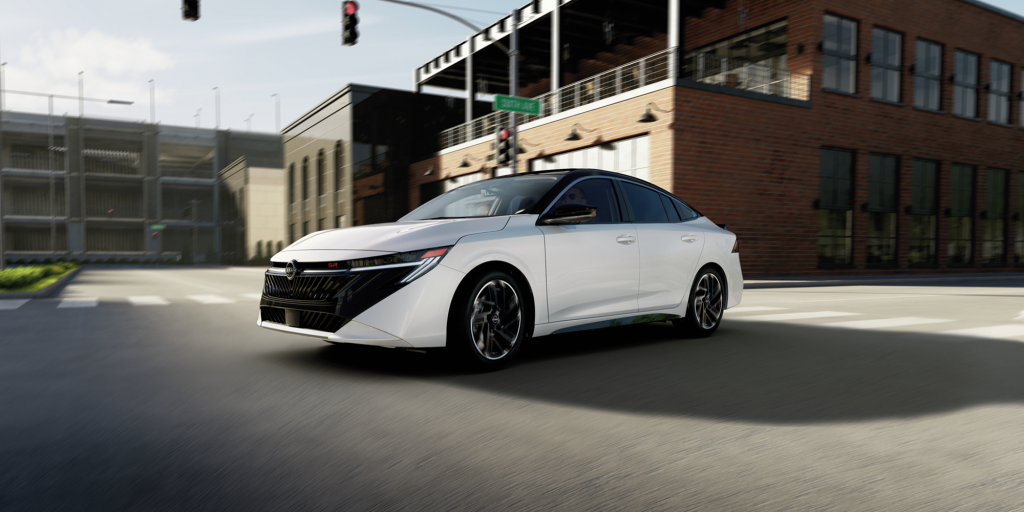
Exterior styling is another defining factor in the Nissan Sentra vs. Honda Civic conversation. The Honda Civic features a low, wide stance with sculpted body lines, available LED lighting, and bold wheel designs, especially in sport-focused trims. Meanwhile, the Nissan Sentra presents a sleek, aerodynamic silhouette with crisp lines and an athletic presence. Its confident stance complements its efficient performance, giving drivers an economy car that looks far from basic. In a Nissan Sentra vs. Honda Civic comparison focused on everyday appeal, both deliver eye-catching design, but the Nissan Sentra’s clean, modern aesthetic pairs seamlessly with its practical efficiency.
Interior Comfort and Technology
Step inside, and the Nissan Sentra vs. Honda Civic evaluation continues with comfort and connectivity. The Nissan Sentra seats up to five passengers and offers up to 14.3 cu.ft. of trunk space and more with its 60/40-split fold-down rear seats, providing versatile cargo space for groceries, luggage, or daily essentials. The Honda Civic also seats five and offers a spacious interior layout up to 14.8 cu.ft., but the Nissan Sentra’s thoughtful cabin packaging ensures that its interior layout never feels cramped.
Seating comfort is a highlight in this Nissan Sentra vs. Honda Civic comparison. The Nissan Sentra features a six-way adjustable driver’s seat and a four-way adjustable front passenger seat as standard equipment. Available upgrades include Sport Leatherette seat trim with contrast stitching, as well as an available leather-wrapped steering wheel and shift knob for an elevated feel. The Honda Civic offers available leather-trimmed seating and a leather-wrapped steering wheel, creating a refined atmosphere. While both provide upscale options, the Nissan Sentra’s supportive Zero Gravity seating design and driver-centric layout contribute to confident comfort on long drives.
Technology plays a central role in any modern Nissan Sentra vs. Honda Civic evaluation. The Nissan Sentra includes Apple CarPlay® integration and Android Auto™ compatibility as standard features, along with an available dual-integrated 12.3-in. monolith display and Bose Premium Audio. The Honda Civic also offers Apple CarPlay® and Android Auto™, with wireless integration available, plus an optional 12-speaker Bose Premium Sound System. With both models offering similar tech features, the Nissan Sentra ensures strong smartphone connectivity and intuitive controls across its lineup, reinforcing its value-driven appeal—not to mention extra features like Active Noise Cancellation and Active Sound Enhancement.
Safety First
Safety is where the Nissan Sentra truly distinguishes itself in this Nissan Sentra vs. Honda Civic comparison. Every Nissan Sentra comes standard with Nissan Safety Shield® 360, which includes Automatic Emergency Braking with Pedestrian Detection, Blind Spot Warning, Lane Departure Warning, Rear Cross Traffic Alert, Rear Automatic Braking, and High Beam Assist. Available features such as ProPILOT Assist, Intelligent Forward Collision Warning, and Intelligent Cruise Control add even more driver assistance support.
The Honda Civic comes standard with Honda Sensing®, featuring Collision Mitigation Braking System™, Road Departure Mitigation System, Adaptive Cruise Control with Low-Speed Follow, Lane Keeping Assist System with Traffic Jam Assist, and Traffic Sign Recognition. While both vehicles deliver comprehensive safety tech, the Nissan Sentra’s standard inclusion of Blind Spot Warning and Rear Cross Traffic Alert across the lineup provides an added layer of everyday awareness that enhances overall peace of mind. In discussions surrounding Nissan Sentra vs. Honda Civic reliability, comprehensive safety systems often play a significant role in long-term ownership satisfaction.
Choosing Confidence and Everyday Value
As this Nissan Sentra vs. Honda Civic comparison illustrates, both sedans deliver impressive performance, efficiency, and modern technology in the compact sedan segment. The Honda Civic offers slightly more horsepower and available premium upgrades, but the Nissan Sentra answers with excellent fuel efficiency, well-rounded standard features, and a comprehensive suite of driver assistance technology included on every model.
In this detailed Nissan Sentra vs. Honda Civic specs breakdown, the differences are subtle rather than dramatic. The Nissan Sentra’s efficient powertrain, up to 38 MPG on the highway, and standard Nissan Safety Shield® 360 create a strong foundation for daily commuting and weekend travel alike. Add in its versatile trunk space, intuitive infotainment system, and refined cabin design, and it becomes clear why many drivers gravitate toward the Nissan Sentra when conducting model comparisons. When evaluating Nissan Sentra vs. Honda Civic reliability, both brands carry strong reputations, but the Nissan Sentra’s thoughtful engineering, safety-first approach, and value-driven trim structure make it especially appealing for drivers seeking long-term confidence. In the world of compact cars, the Nissan Sentra stands out as a smart, stylish, and efficient option that balances practicality with modern sophistication. If you’re still narrowing down your Nissan Sentra vs. Honda Civic decision, the best way to experience the difference is from behind the wheel. Visit Crossroads Nissan of Wake Forest today to explore available trim levels and see firsthand how the Nissan Sentra can elevate your daily drive.
*EPA Fuel Economy Estimates. Actual mileage may vary with driving conditions—use for comparison only.
Connect with us

